Key Takeaways
- “Sinking foundation” is a common way to describe settlement, meaning downward movement of soil or support beneath a structure. The mechanism and significance are site dependent.
- Differential settlement, where parts of a structure move by different amounts or at different rates, tends to be more consequential than uniform movement because it distorts the building.
- Soil support, water and drainage, compaction, fill, leaks, moisture variation, vegetation, and ground disturbance can contribute. No single factor applies to every property.
- Cracks, sloping floors, operating changes, gaps, water issues, or visible separation are observations. Their pattern, location, and rate of change matter more than any single symptom.
Homeowners often say a foundation is sinking after noticing changes in floors, walls, or exterior features. In technical language, many of those observations relate to settlement, which is downward movement of soil or support beneath part of a structure. This guide clarifies what settlement means, why the pattern of movement matters, the conditions that commonly contribute, what to document, and practical steps to manage risk while you sort out next steps. It provides general education only. It is not a site-specific diagnosis, geotechnical report, structural evaluation, repair specification, safety clearance, insurance conclusion, financial recommendation, or contractor recommendation.
What Does a Sinking Foundation Mean?
Settlement as Downward Movement
Settlement is downward movement of a structure or its support as underlying soils compress, consolidate, lose material, or otherwise change. Foundations react to the ground they bear on, the loads they carry, and the moisture and drainage conditions around them. When people describe a sinking foundation, they are usually seeing effects of that downward shift. Those effects can be minor and stable, or more pronounced, depending on the structure and the site.
Uniform Settlement, Differential Settlement, and Rotation
Settlement does not affect every building the same way. Uniform settlement means the entire foundation moves down by a similar amount, which may be noticeable yet cause limited distortion. Differential settlement occurs when one area moves more or faster than another, producing tilt, bending, or twist that can crack finishes and throw alignments off. Rotation is another pattern, where a portion rotates as it settles, often showing as racking in frames or diagonal cracking at corners. The pattern can matter as much as the total magnitude.
Why “Sinking” Is a Description, Not a Diagnosis
Sinking describes direction, not cause. A crack, a gap, or a sticky door confirms that something changed position, but not why or when. A useful evaluation looks at site history, soil behavior, moisture patterns, construction details, timing, and whether changes are ongoing. Because different mechanisms can produce similar symptoms, treat the phrase sinking foundation as a starting point for investigation, not a conclusion.
Potential Causes of a Sinking Foundation
Compressible Soil, Consolidation, and Uneven Bearing
Some soils compress under sustained load through consolidation. If compression varies across the footprint, differential settlement can result. Layer changes, soft pockets, or abrupt transitions between soil types can produce uneven bearing. Even with sound construction, natural subsurface variability can influence how a structure settles over time, especially under changing moisture or loading.
Poorly Compacted Fill and Disturbed Ground
Many building pads are formed with imported or reworked soil. If that fill was not compacted to an appropriate standard, or if native ground was disturbed and not adequately densified, settlement can occur after construction. Buried organic matter or debris can decay and leave voids. Differences between portions supported on native soil and areas over deeper fill often show as cracks, steps, or tilting near transitions.
Water, Drainage, Erosion, and Fine-Particle Loss
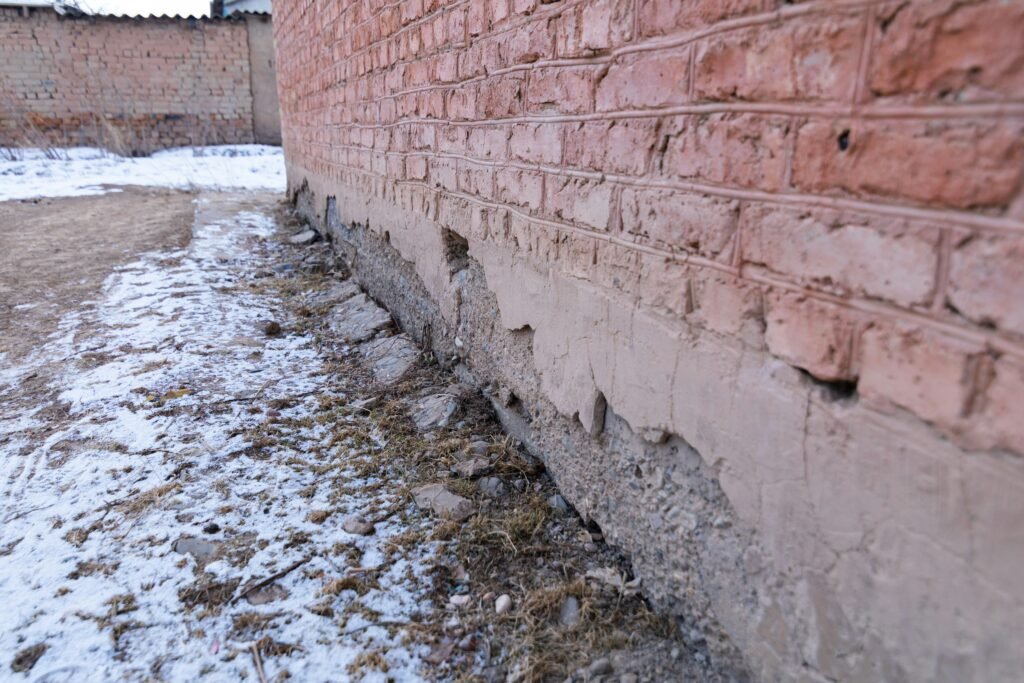
Water can soften certain soils, mobilize fines, and erode support. Concentrated roof runoff, short downspouts that discharge at the base of walls, negative grading, or clogged drains drive water toward the foundation. In some soils, repeated wetting increases settlement potential; in others, flowing water carries fines away and leaves voids. Surface water management is separate from structural stabilization, but it often shapes overall risk.
Plumbing Leaks and Subsurface Water
Leaks from supply lines, irrigation, or sewers can saturate soils near the structure long enough to soften support or wash out fines. These leaks can remain hidden, so timing and corroborating clues matter. Elevated groundwater, perched water layers, and seasonal fluctuations also change bearing conditions. Because subsurface factors are not always visible, multiple lines of evidence help interpret what you see at the surface.
Drought, Moisture Variation, and Expansive-Soil Context
Some soils shrink as they dry and swell as they wet. On moisture-sensitive sites, uneven drying under part of a foundation can produce relative downward movement, while wetting elsewhere can lift other areas. Swelling can push portions upward and then allow them to settle as moisture recedes. Distinguish settlement, which is downward, from heave, which is upward. On expansive soils, both can occur, sometimes in different seasons or at different edges of the same property.
Trees, Landscaping, Excavation, and Nearby Ground Change
Large trees and dense plantings can alter soil moisture near shallow foundations or slabs. Root uptake may dry soils, while irrigation can keep localized zones wetter than surroundings. Excavation for utilities, nearby construction, or changes in loading at adjacent properties can shift ground stresses. Even well intended landscaping or grading work can redirect water and affect support if soil behavior is not considered.
Signs That May Appear With Foundation Settlement
Cracks, Gaps, and Masonry Changes
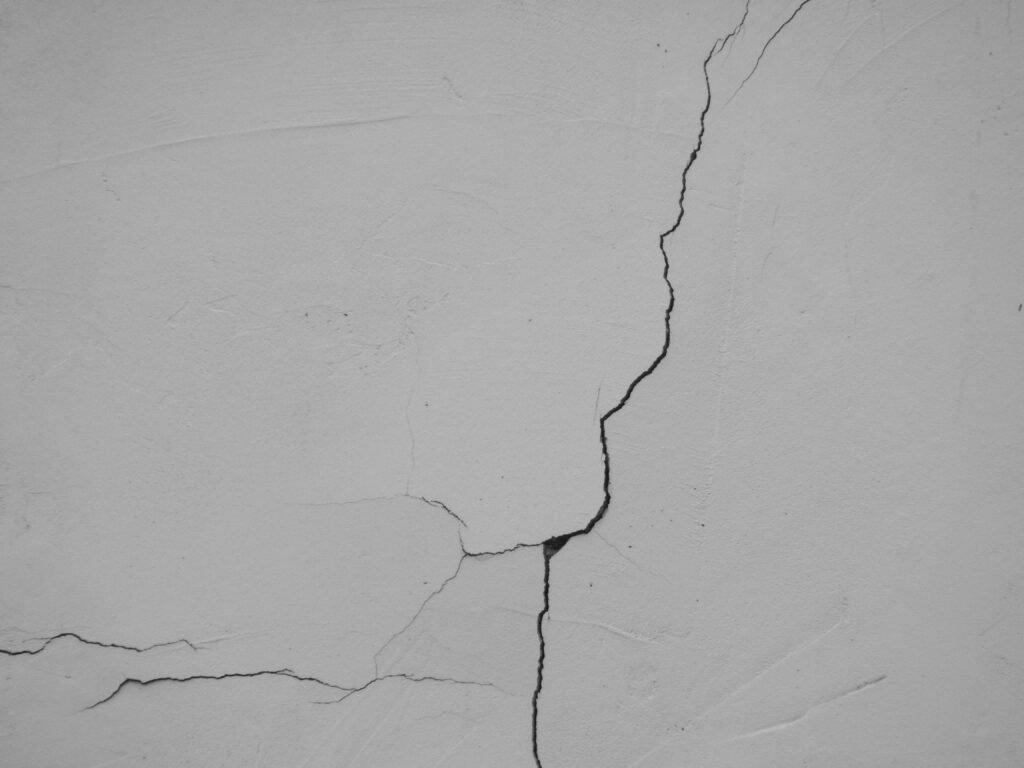
Stair-step cracking in masonry, diagonal cracks near openings, or gaps at trim and siding often accompany differential movement. Horizontal mortar joints that drift out of line or bricks that appear to rotate suggest distortion. No single crack proves settlement by itself. Orientation, location, context, and whether a crack is changing over time are more informative than a snapshot.
Doors, Windows, and Interior Alignment Changes
Doors and windows that become hard to open or close, or latches that no longer align, can reflect frame racking from movement. Trim separating at corners, baseboards lifting from floors, or drywall cracks radiating from window corners fit the same pattern. Treat these as observations rather than diagnoses. Map where they occur and track how they evolve to distinguish isolated finish issues from broader movement.
Sloping or Uneven Floors
A sloped or uneven floor can result from subfloor changes, joist deflection, or foundation movement. In slab-on-grade homes, a tilted slab often shows as floor slope and gaps under baseboards. In crawlspace or basement homes, substructure conditions add another set of variables. Measured change over time is more useful than a one-time impression because some older homes were never perfectly level.
Chimneys, Porches, Steps, and Exterior Separation
Detached and semi-detached elements such as chimneys, stoops, steps, and porches may move differently from the main structure, especially when they bear on separate foundations or shallow footings. A gap opening between a chimney and siding, or steps settling away from a landing, can indicate localized support changes. Whether these elements are structurally tied to the house or isolated affects both appearance and significance.
Moisture, Drainage, and Soil Clues
Ponding near the foundation, eroded soil bands, splash marks, or gutter discharge at the base of walls point to persistent water exposure. Efflorescence on masonry, damp spots, or water entry after storms reveal drainage patterns that can influence support. These signs do not prove settlement on their own; they describe the environment in which the foundation is operating.
Sinking Foundation Versus Other Types of Movement
Settlement Versus Heave
Settlement is downward movement caused by reduced or changing support. Heave is upward movement often linked to swelling soils, frost, or uplift pressures. A single structure can experience both at different edges or across seasons. Direction matters because evaluation steps, risk implications, and corrective categories differ for downward versus upward movement.
Foundation Support Versus Surface-Concrete Movement
Patios, walkways, and driveways can settle or tilt independently from the home’s foundation. These slabs are often thinner, unreinforced, and placed on shallow base materials. If a sidewalk drops at the edge of a stoop, it may be a surface-concrete issue rather than foundation movement. Note whether movement aligns with structural walls or only affects exterior flatwork to clarify what is changing.
Moisture Problems Versus Structural Movement
Water in a basement or crawlspace can result from bulk water pathways, drainage changes, or air and vapor movement, independent of settlement. Improving grading, gutters, and discharge can reduce water entry without altering the foundation’s alignment. Keep water-management tasks distinct from structural stabilization, since one can be advisable even when the other is not immediately required.
Why Similar Symptoms Need Different Evaluation
Cracks, sticky doors, and sloping floors can arise from settlement, heave, framing changes, seasonal humidity, or finish-layer issues. Because different mechanisms can create similar symptoms, checklists rarely tell the full story. A practical evaluation looks for patterns across multiple indicators, considers timing and weather, and weighs likely mechanisms before drawing conclusions.
How to Document a Possible Sinking Foundation
Use Dated Photos and Consistent Views
Clear, dated photographs taken from the same locations and angles help reveal change over time. Capture a wider context first, then move closer for specific cracks, gaps, or separations. Include a consistent reference such as a ruler or coin for scale when safe, and keep zoom and perspective consistent between sessions so comparisons are meaningful.
Record Location, Direction, Timing, and Change
Note where each observation occurs, which direction a surface faces, and when you first saw it. Track whether cracks lengthen, widen, or branch, and whether doors or windows become harder or easier to operate. Indicate any seasonal pattern you notice. A simple log that pairs photos with dates and notes often outperforms memory.
Track Water, Weather, Landscaping, and Utility Context
Keep a record of heavy rain, drought periods, freeze and thaw cycles, gutter cleanings, downspout changes, irrigation adjustments, and new plantings or removals. Document plumbing or sewer work, including suspected leaks or repairs, along with nearby excavation or construction. Correlating movement with site or environmental changes narrows likely mechanisms.
What Professional Evaluation May Add
Depending on conditions, a qualified professional may use level surveys, floor-elevation maps, crack gauges, laser or optical measurements, or periodic rechecks to quantify change. In some cases, soil investigation or targeted exposure clarifies support conditions. Appropriate foundation repair methods depend on structure type, access, safety, and suspected mechanisms. The aim is to collect relevant data without assuming a single symptom explains everything.
Managing Risk While You Seek Clarity
Keep Surface Water Moving Away From the Foundation
Direct roof runoff and surface water away from the foundation to reduce unnecessary saturation. Maintain gutters, extend downspouts to discharge on stable ground that slopes away, and adjust grading where practical to promote positive drainage. These steps manage exposure and are generally low risk, but they remain separate from any structural stabilization decisions.
Investigate Suspected Plumbing Leaks Promptly
If you suspect a supply, irrigation, or sewer leak, consider appropriate testing and repair for your plumbing system. Leaks can locally saturate soils or move fines, changing support over time. Addressing a leak is both risk management and water conservation. It does not by itself confirm that settlement occurred or predict future movement.
Avoid Abrupt Water-Pattern Changes on Sensitive Sites
On moisture-sensitive soils, sudden changes—such as shutting off long-standing irrigation or concentrating new downspout discharge in one area—can shift moisture patterns the ground had adapted to. Where conditions appear sensitive, favor gradual adjustments and even distribution to reduce the chance of sharp differentials. Take extra care near transitions, corners, and known soft spots.
Know When Safety or Rapid Change Requires Timely Evaluation
Rapidly evolving conditions, such as a wall bowing, a chimney separating significantly, or doors that suddenly will not close, can indicate active movement. Water accumulation that compromises electrical systems or stability also warrants prompt attention. When in doubt about safety, seek timely evaluation. This article is not a safety clearance and does not replace site-specific judgment.
Repair-Category Context Without a One-Size-Fits-All Answer
Water Management and Drainage Work
Most properties benefit from maintaining gutters, directing downspouts away from the structure, improving grading, or adding appropriate drainage pathways. These measures manage water exposure and can reduce the likelihood of moisture-related support changes. Treat them as part of a risk-management plan rather than proof that water alone caused movement or that settlement will cease.
Support Correction and Structural Stabilization Categories
When findings indicate support must be addressed, potential categories include underpinning to transfer loads to deeper soils, soil improvement or injection where suitable, and slab lifting approaches for certain slabs. Feasibility depends on soil conditions, structure type, loading, access, and clear objectives. No single approach fits every site, and success criteria should be defined up front.
Why Surface Patches Do Not Correct Settlement
Filling a crack in brick, stucco, or drywall improves appearance and weather resistance, but it does not correct underlying support changes. If movement continues, patched finishes may re-crack or reopen. Cosmetic work generally follows water and support measures that have been addressed or stabilized, not the other way around.
Questions to Ask When Comparing Evaluation or Repair Scopes
- What evidence supports the proposed mechanism of movement, and how was it measured or verified over time?
- How does the plan handle water management separately from structural stabilization when both are relevant?
- What are the realistic objectives—such as reducing future movement, improving serviceability, or restoring function—and how will success be measured?
- Which site conditions or assumptions could change the outcome, and how will uncertainties be monitored or managed?
- What maintenance or monitoring is recommended after the work, and which signs should trigger re-evaluation?
Frequently Asked Questions About a Sinking Foundation
What causes a sinking foundation?
The phrase often reflects settlement caused by changing or inadequate support beneath part of a structure. Contributors can include compressible or variable soils, poorly compacted fill, erosion or loss of fines from water flow, plumbing leaks, moisture-sensitive soil behavior during drought or wet periods, and nearby excavation or loading changes. The weight of each factor varies by property, which is why pattern, timing, and context guide evaluation.
Can a sinking foundation stop on its own?
Some settlement happens early in a structure’s life and then slows as soils consolidate and moisture and loading stabilize. In other situations, movement can continue or reactivate with seasonal moisture shifts, leaks, or altered drainage. Documentation over time clarifies whether conditions are active or quiet. Assuming stability without evidence can mislead, just as assuming continued movement without tracking can prompt unnecessary worry.
What are the first signs of foundation settlement?
Early observations can include diagonal cracks near window or door corners, minor misalignment at frames, hairline stair-step cracks in masonry, or slight floor slopes. Small gaps at trim, limited separations at exterior attachments, and changes in door or window operation are also common. None of these alone confirms settlement. Location, pattern, and change over time are more informative than a single symptom.
Is a sinking foundation always a structural emergency?
Not always. Many homes experience some settlement without immediate safety concerns. Urgency depends on the rate of change, the movement pattern, and whether critical elements are affected. Rapid change, visible separation of structural components, or signs of instability call for timely evaluation. This article is not a safety clearance; rely on site-specific judgment if you suspect urgent issues.
The Bottom Line on a Sinking Foundation
People often use sinking foundation to describe settlement, meaning downward movement of soil or support beneath part of a structure. The concern hinges less on a single crack and more on the pattern, direction, and rate of change across the building. Water and drainage, soil behavior, fill quality, vegetation, leaks, and nearby ground changes can all contribute, but no one factor explains every site. While you gather information, keep surface water moving away, investigate suspected leaks, and avoid abrupt moisture shifts that could create sharp differentials. When the pattern is unclear or change appears active, a measured evaluation that separates settlement from heave, water management from structural stabilization, and observations from conclusions helps you choose next steps without assuming a one-size-fits-all answer.