Foundation cracks concern homeowners across the country. The state’s expansive clay soils, harsh winters, and relentless freeze-thaw cycles create near-perfect conditions for foundation damage. A hairline crack might simply be a house settling. Larger fissures, particularly horizontal ones, point to structural instability or a serious water intrusion. Repairing a foundation crack in 2026 requires understanding the underlying cause, choosing the right repair method, and knowing when to call a professional.
This guide walks you through everything you need to know, from identifying what type of crack you are dealing with to understanding which repair method actually works.
Understanding Foundation Cracks
Before exploring repair methods, identify the type of crack present. The location, size, and direction of a crack reveal significant information about the health of a foundation. Not all cracks are equal, and misidentifying a crack can lead to the wrong repair, which wastes money and allows the real problem to worsen.
Hairline and Shrinkage Cracks
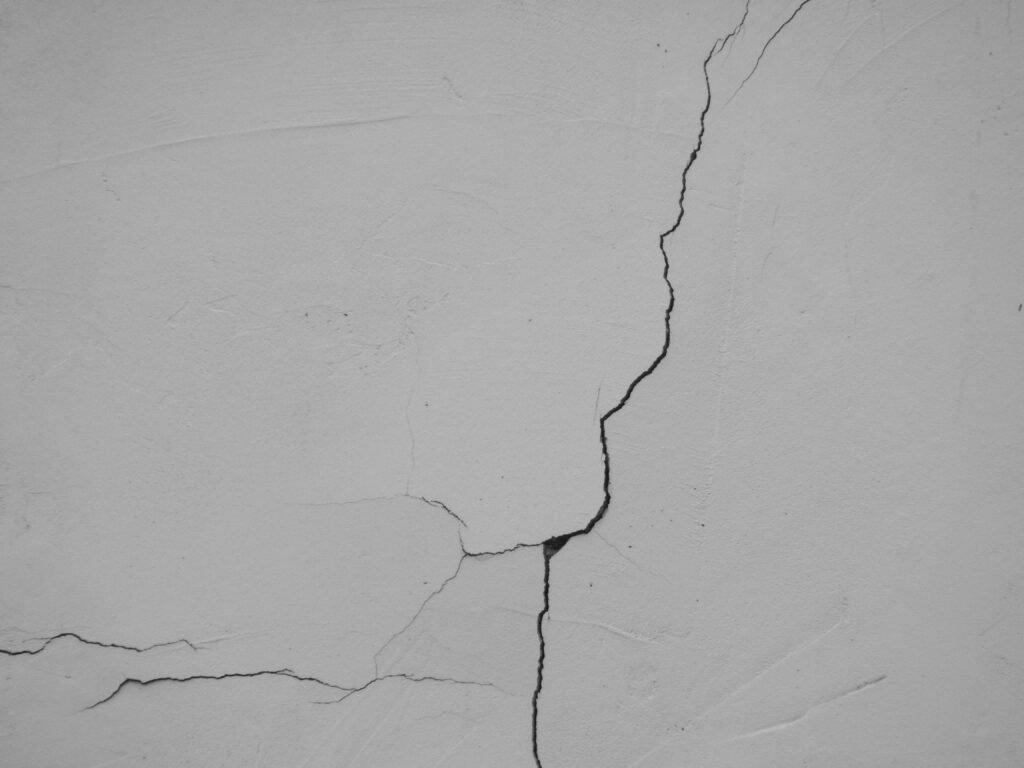
Hairline cracks are thin, shallow lines that often appear shortly after a foundation is poured. As concrete cures, it naturally shrinks, leading to these minor fissures. They are generally harmless and do not indicate structural damage on their own. Homeowners should monitor them closely over time. If a hairline crack begins to widen or allows water to seep through, it requires attention before it develops into something more serious.
Vertical Cracks
Vertical cracks run straight up and down, or within 30 degrees of vertical. They are the most common type of foundation crack and typically result from natural settlement. While vertical cracks are usually not structural threats, they can still allow groundwater to enter a basement or a crawlspace. If a vertical crack is wider than 1/8 of an inch, or if it is noticeably wider at the top or the bottom, a professional inspection is recommended. A crack that is wider at the bottom suggests the foundation is sinking on that end.
Diagonal Cracks
Diagonal cracks slant across a foundation wall at an angle. They indicate uneven settling, where one side of a house sinks faster than the other. The wider end of a diagonal crack points toward the area experiencing the most significant movement. Diagonal cracks can often be sealed with epoxy, but the underlying settlement issue must be addressed to prevent recurrence. Ignoring the cause means the crack will reopen, or a new one will form nearby.
Horizontal Cracks
Horizontal cracks are the most serious type of foundation damage. They are caused by hydrostatic pressure, which is the force exerted by water-saturated soil pushing laterally against the foundation walls. When the soil outside a foundation becomes saturated, it becomes incredibly heavy. This immense pressure forces the walls to bow inward. A horizontal crack indicates structural failure and requires immediate professional intervention. Left unaddressed, a bowing wall can eventually collapse.
Stair-Step Cracks
Stair-step cracks appear in brick, block, and masonry foundations. They follow the mortar joints in a zigzag pattern. These cracks are a classic sign of differential settlement, where the soil beneath a foundation shifts unevenly. If a stair-step crack is wider than 1/4 of an inch, or if the wall is visibly bulging, it is a severe structural issue that demands professional evaluation.
Slab Floor Cracks
Slab floor cracks form when the soil underneath a concrete slab gets wet and expands upward. Clay soil is particularly prone to this type of swelling. Winters add another layer of stress, because water trapped under a slab can freeze and force the concrete to lift and break apart. Slab cracks that are growing, leaking, or accompanied by uneven floors need professional assessment.
What Causes Foundation Cracks
Foundation cracks do not happen without a reason. They are the physical result of stress placed on a home’s structural support system. Several factors contribute to this stress, particularly in regions with challenging soil and weather conditions.
Hydrostatic Pressure
Hydrostatic pressure is the leading cause of severe foundation damage, including bowing walls and horizontal cracks. When poor drainage allows water to pool near a foundation, the soil absorbs that water and expands. This saturated soil exerts tremendous lateral force against the foundation walls. Over time, the walls cannot withstand the pressure, leading to bowing and cracking. Clogged gutters, improper grading, and inadequate drainage systems are the most common reasons hydrostatic pressure builds up around a home.
Soil Settlement
All houses settle to some degree over time. As the weight of a structure compresses the soil beneath it, the foundation sinks slightly. If the soil compresses evenly, the house settles uniformly without issue. If the soil compresses unevenly, it creates differential settlement. This uneven movement places immense stress on the foundation, resulting in vertical, diagonal, and stair-step cracks. Older homes are particularly vulnerable because many were built without steel rebar reinforcement inside the concrete.
Expansive Clay Soils
The type of soil surrounding a home plays a massive role in foundation health. Clay soil acts like a sponge, swelling significantly when it absorbs water during heavy rains or spring thaws. During dry summer months, the clay shrinks and pulls away from the foundation walls. This constant cycle of expansion and contraction creates a relentless push-and-pull effect that eventually fractures concrete and masonry.
Freeze-Thaw Cycles
In cold climates, freeze-thaw cycles are a major threat to foundations. Water inevitably finds its way into the tiny pores and existing hairline cracks of concrete. When temperatures drop below freezing, that trapped water turns to ice and expands by roughly 9%. This expansion forces the cracks wider. When the ice thaws, the water travels deeper into the newly widened crack, only to freeze and expand again during the next cold snap. Over several seasons, what started as a hairline crack can become a significant structural concern.
Tree Roots
Large trees planted too close to a house can cause significant foundation problems. As tree roots grow in search of water and nutrients, they displace soil and exert direct pressure against foundation walls. Roots also absorb massive amounts of water from the soil, causing the soil to shrink and leading to uneven foundation settlement. This is more likely to cause bowing wall issues than uneven floors. Planting large trees at least 15 to 20 feet away from the foundation is a straightforward way to reduce this risk.
Plumbing Leaks
Hidden plumbing leaks beneath a home can oversaturate the soil around the foundation. This is a cause that many homeowners overlook. If you notice unexplained wet soil, persistent odors, or slow drains alongside foundation cracks, a plumbing leak may be contributing to the problem. Plumbing leaks must be dealt with by a licensed plumber before foundation repair can be effective.
Repairing a Foundation Crack
The right repair method depends entirely on the type of crack, its cause, and whether it is a structural or a waterproofing issue. Foundation repair companies use an engineering-minded approach to diagnose the root cause and implement a permanent solution. Below is a breakdown of the most common repair methods and when each one is appropriate.
| Repair Method | Best For | Severity Level |
| Epoxy injection | Dry, non-structural vertical or diagonal cracks | Minor to moderate |
| Polyurethane foam injection | Actively leaking cracks | Minor to moderate |
| PVC wall patch | Larger, leaking, or recurring cracks | Moderate |
| Carbon fiber straps | Bowing walls under 2 inches of inward movement | Moderate |
| Steel I-beams / waler wall braces | Bowing walls over 2 inches, horizontal shearing cracks | Severe |
| Helical piers | Sinking or settling foundations | Severe |
| Interior drain tile system | Ongoing water intrusion and hydrostatic pressure | Moderate to severe |
Epoxy and Polyurethane Injections
For non-structural vertical and diagonal cracks, injection methods are highly effective. Epoxy injection bonds the concrete back together, restoring its original strength. It is ideal for dry cracks that need structural reinforcement. Polyurethane foam injection is used for actively leaking cracks. The foam expands upon contact with moisture, filling voids and creating a flexible, watertight seal. Both methods involve installing injection ports every six to eight inches along the crack and injecting material from the back of the wall to the front.
PVC Wall Patches
When dealing with long-term, larger, or actively leaking cracks, a PVC wall patch is often the superior choice. Epoxy and polyurethane are short-term fixes that can fail if the wall continues to move even slightly. A PVC patch is installed over the crack to redirect incoming water straight down into an interior drainage system. This ensures that even if the crack shifts or widens slightly, the basement remains dry. For leaking cracks in particular, this approach addresses the water management problem rather than just sealing the surface.
Carbon Fiber Straps
Carbon fiber straps are used to stabilize bowing walls. When a wall bows inward due to hydrostatic pressure, carbon fiber straps are applied vertically to the wall surface. They provide immense tensile strength, preventing any further inward movement. Carbon fiber straps only provide stabilization; they do not straighten the wall, and they do not prevent future cracks from forming. They are typically recommended for walls bowing under two inches.
Steel I-Beams and Waler Wall Braces
If a wall is bowing more than two inches, or if it exhibits horizontal shearing cracks, carbon fiber is insufficient. In these severe cases, steel I-beams or waler wall braces are required. These heavy-duty steel supports are anchored to the floor and the ceiling joists, providing the rigid strength needed to halt structural failure. Unlike carbon fiber straps, waler wall braces can straighten walls in some cases. For walls that have shifted significantly, this distinction matters.
Helical Tie-Back
A helical tie-back is an additional solution for bowing walls. Steel rods are drilled horizontally through the foundation wall and screwed into the stable soil outside. They pull the wall back toward its original position and provide ongoing resistance against hydrostatic pressure. This method works well in situations where interior space is limited or where the bowing is too severe for carbon fiber alone.
Helical Piers
When a foundation is sinking due to severe settlement, helical piers are the preferred permanent solution. Helical piers are long steel shafts with helical blades. They are screwed deep into the ground until they reach stable, load-bearing soil or bedrock. The weight of the house is then transferred from the unstable surface soil onto the piers, permanently stabilizing the foundation and often providing lift to return the house to a level position. Helical piers can be installed from inside or outside the home, depending on the situation.
Interior Drain Tile Systems
If a foundation crack is allowing water into a basement, sealing the crack is only half the battle. Managing the water is the other half. An interior drain tile system involves installing a perforated pipe beneath the basement floor, along the perimeter of the foundation walls. This system collects groundwater before it can build up hydrostatic pressure and directs it to a sump pump. A sump pump is always included with a drain tile installation to safely discharge the water away from the home. A battery backup sump pump is also recommended for protection during power outages.
Can You Repair Foundation Cracks Yourself
Hardware stores sell DIY epoxy repair kits, and many instructional videos suggest that homeowners can fix foundation cracks themselves. DIY foundation repair is highly risky and often leads to more expensive problems down the road.
DIY kits are only suitable for very small, non-leaking, non-structural hairline cracks. For anything wider than 1/8 of an inch, or any crack that is leaking or horizontal, a professional is required. DIY repairs often fail because homeowners lack the high-pressure equipment needed to inject material deep into the wall. A DIY repair only addresses the symptom and fails to address the root cause. If the root cause is not fixed, the crack will simply reopen, or new cracks will form nearby.
Beyond the technical limitations, there is a financial risk. Many homeowners spend $75 to $225 on a DIY kit only to see the crack reopen months later. At that point, a professional repair is still needed, plus the cost of removing the failed DIY material. Professional epoxy injection for a single crack typically runs $500 to $2,500 depending on the size and location, but it comes with a transferable warranty and addresses the root cause.
Signs You Need Professional Foundation Repair
Homeowners should inspect their foundations regularly. If you notice any of the following warning signs, call a professional for a free inspection.
Cracks wider than 1/8 of an inch are a concern. Cracks that are actively leaking water or show signs of moisture stains require attention. Horizontal cracks or stair-step cracks in masonry are major warning signs. Walls that are visibly bowing or bulging inward need immediate evaluation. Floors that are uneven or dipping toward the outside walls suggest settlement. Doors and windows that stick or refuse to close properly indicate shifting. Gaps appearing between the floor and the baseboard trim are another sign. Cracks in the drywall above door frames or windows also point to foundation movement.
What Does Foundation Crack Repair Cost in 2026
The cost of repairing a foundation crack in 2026 varies widely depending on the type of crack, the repair method required, and the extent of the damage. According to Angi, the national average for foundation repair sits between $2,225 and $8,133, with most homeowners paying around $5,100.
| Repair Type | Estimated Cost |
| DIY epoxy kit (minor hairline crack) | $75–$225 |
| Professional epoxy injection (per crack) | $500–$2,500 |
| PVC wall patch | $500–$1,500 |
| Carbon fiber straps (per strap) | $85–$250 per foot |
| Steel I-beams / waler wall braces | $4,000–$12,000 |
| Helical piers (per pier) | $1,500–$3,000 |
| Interior drain tile system | $2,000–$7,000 |
| Bowing wall repair | $4,000–$12,000 |
| Foundation settling / underpinning | $10,000–$20,000+ |
These are national estimates. Professional foundation repair contractors provide free inspections and transparent pricing so you know exactly what you are paying for before any work begins.
Preventing Foundation Cracks
While you cannot control the weather or the soil type, there are practical steps you can take to manage moisture and protect your foundation.
Maintain proper grading around your home. Ensure the ground slopes away from the foundation. The recommended slope is a drop of six inches over the first 10 feet. This directs rainwater away from the walls and prevents water from pooling near the foundation.
Extend your downspouts and keep your gutters clean. Downspouts should discharge water at least six to 10 feet away from the foundation. Clogged gutters overflow and dump water directly against the house, which is one of the most common causes of hydrostatic pressure buildup.
Manage your landscaping carefully. Avoid planting large trees close to the house. Their roots can damage the foundation, and they alter the moisture content of the soil. Shallow-rooted plants and shrubs are a safer choice near foundation walls.
Install a drainage system if you live in an area with high water tables or expansive clay soils. An interior drain tile system and a sump pump are necessary for managing hydrostatic pressure. A battery backup sump pump ensures protection even during power outages.
Monitor small cracks regularly. Check existing cracks every few months for any signs of active movement, such as widening or lengthening. Marking the ends of a crack with a pencil and noting the date is a simple way to track whether it is stable or growing.
Schedule professional inspections every 3 to 5 years, or after any major storm, plumbing failure, or extended period of heavy rain. Professional inspectors have specialized equipment that can detect subtle problems before they become expensive repairs..
Why Consult a Professional Foundation Repair Company
Foundation Crack Repair
They repair all types of foundation cracks, from minor hairline fissures to severe horizontal cracks in bowing walls. Their repair methods include epoxy injection, polyurethane foam injection, and PVC wall patches, selected based on the specific type and cause of the crack.
Bowing Wall Stabilization
For walls bowing under two inches, they install carbon fiber straps to prevent further inward movement. For walls bowing over two inches, or walls with horizontal shearing cracks, they use steel I-beams or waler wall braces. In cases where the wall needs to be pulled back toward its original position, they offer a helical tie-back system as an option.
Foundation Settlement Repair
Sinking or settling foundations are addressed with helical piers. These steel shafts are screwed deep into stable soil or bedrock, transferring the weight of the house away from the unstable surface soil. Helical piers are our preferred solution for settling foundations.
Basement Waterproofing
Water intrusion through foundation cracks is managed with interior drain tile systems and sump pump installation. They focus on the wall-floor seam as the primary weak area. Water entry points include cracks, the wall-floor seam, porous cinder blocks, and hydrostatic pressure through floors. A sump pump is always included with drain tile installation.
Frequently Asked Questions
Are all foundation cracks serious?
Most small hairline cracks caused by normal settling are not a major concern. Horizontal cracks, cracks wider than 1/8 of an inch, cracks that are leaking, or cracks accompanied by bowing walls or uneven floors are serious and require professional evaluation.
How much does it cost to repair a foundation crack?
The cost depends on the type of crack, the repair method required, and the extent of the damage. Minor epoxy injections for a single non-structural crack are far less expensive than structural repairs involving steel beams or helical piers.
Will carbon fiber straps straighten my bowing wall?
No. Carbon fiber straps provide stabilization and prevent further inward movement, but they do not straighten walls. If a wall needs to be straightened, waler wall braces or steel I-beams are required. For walls bowing more than two inches, steel beams are typically the appropriate solution.
Does homeowners insurance cover foundation repair?
You may be covered by your homeowner’s insurance depending on the cause of the damage. We always advise homeowners to check directly with their insurance provider, as coverage varies significantly between policies.
What is the difference between epoxy and polyurethane injection?
Epoxy injection is used for dry, structural cracks. It bonds the concrete back together and restores the wall’s original strength. Polyurethane foam injection is used for actively leaking cracks. The foam expands upon contact with moisture, creating a flexible, watertight seal. The right choice depends on whether the crack is dry or wet.
How long does foundation crack repair take?
Most repair work wraps up within a few days and happens primarily outside the home. Homeowners can typically remain in their house throughout the process with minimal disruption.
Can I sell my home if it has foundation cracks?
Foundation cracks reduce what buyers will pay and create obstacles with mortgage approvals. Lenders often refuse to approve mortgages for properties with unresolved structural issues. Addressing foundation problems before listing your home protects its value and broadens your pool of potential buyers.
How do I know if my foundation crack is structural or cosmetic?
Horizontal cracks, cracks wider than 1/4 of an inch, cracks accompanied by bowing walls, and cracks that are actively growing are structural. Hairline cracks and small vertical cracks that are stable and dry are typically cosmetic.