Key Takeaways
- Potential signs can show up in interior finishes, floors, doors, windows, basement or foundation walls, exterior masonry, adjacent concrete, and even in how moisture behaves.
- A lone crack, a sticky door, or a sloped spot in the floor is not a diagnosis. Location, pattern, timing, combinations of clues, and the pace of change carry more weight.
- Multiple observations—or one that evolves over time—usually tell you more than a single stable cosmetic blemish.
- Pronounced wall movement, sudden shifts, fast-changing cracks, visible separations, or any safety concern warrant prompt evaluation by a qualified professional.
Homeowners often wonder which changes signal foundation trouble and which are simple cosmetic aging. This guide explains common observations, offers context for interpreting them, and outlines practical ways to document change over time. It provides general education only; it is not a diagnosis, foundation repair plan, safety clearance, or an assessment of any specific property.
How to Think About Signs of Foundation Problems
Focus on patterns and change over time rather than on a single crack or a door that sticks once. The aim is not to self-diagnose. Instead, create clear, dated observations that help a professional see what has stayed steady and what has moved.
A Sign Is Not a Diagnosis
A sign is something you can see or feel—a crack, a gap, a floor slope, a latch that no longer catches. Standing alone, it does not prove foundation movement. Similar symptoms can result from humidity swings, material shrinkage, worn hardware, or ordinary aging. Treat each item as a clue, then weigh it alongside where it appears, how it looks, when it started, and whether other clues in the same area point the same way.
What Makes an Observation More Meaningful
Notes gain value when tied to a house map, a date, and follow-up checks. Clusters of related changes in one zone, or shifts that line up with heavy rain or extended drought, add useful context. Reappearing cracks and visible separations call for closer attention than a single hairline that never changes. The stronger the pattern and the clearer the timeline, the easier it is to judge stability versus movement.
Crack Patterns and Surface Changes
Cracks are common in homes. Some are harmless; others can point to movement. Pay attention to where a crack is located, its direction, whether it comes back after patching, and whether it grows or changes character.
Drywall, Plaster, Ceiling, and Trim Cracks
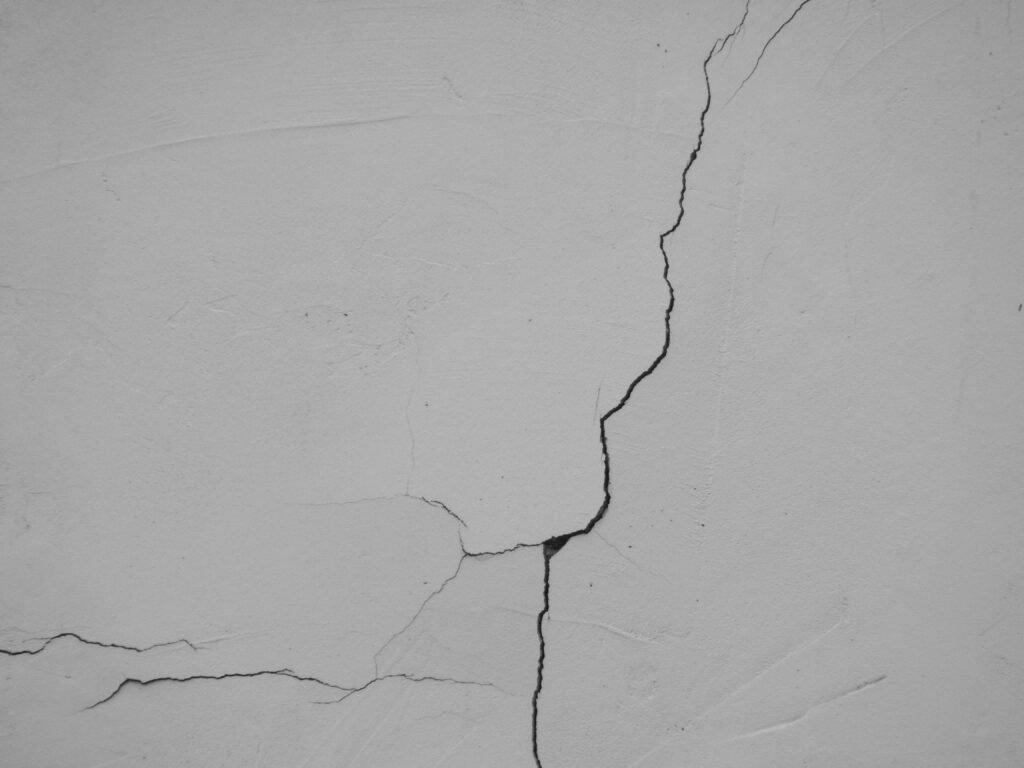
Fine drywall or plaster cracks often track with seasonal humidity or small movements in finishes. Diagonal cracks running from door or window corners, recurring corner splits, or ceiling cracks that appear alongside gaps at nearby trim may reflect frame distortion. Note whether cracks cluster on one side of the home, if they lengthen or reopen after patching, and whether their behavior changes with seasons.
Foundation-Wall and Basement-Wall Cracks
Vertical or diagonal cracks in foundation or basement walls can reflect drying shrinkage, settlement, or other movement. Patterns that include horizontal cracking, bulging, or leaning in a below-grade wall are more concerning and merit timely evaluation. Record the crack path, wall material, and any related clues such as inward bowing, new water entry, soil pressure signs, or shifting at corners.
Brick, Block, and Exterior Masonry Cracks
In brick or block, stair-step cracking along mortar joints, vertical separations at wall corners, and cracks radiating from openings can be informative. Note whether a crack widens toward the top or bottom, whether it lines up with interior changes, or if a single area shows several related issues. Brick veneer can move independently of framing, so one masonry crack by itself is not a conclusion.
Slab, Tile, and Concrete Cracks
Slabs, tile, and concrete can crack from shrinkage, point loads, subbase voids, or differential movement. Interior floor tiles that break in a line or repeat in the same zone, or new slab cracks that run to baseboards and open gaps, are worth tracking. Outside, watch for settlement at patios, garage slabs, or walks and whether those changes correspond with shifts at nearby doors, steps, or walls.
Reappearing or Changing Cracks
A patch that repeatedly splits, a crack that telegraphs through fresh paint, or a line that changes length or direction is more informative than a steady blemish. Photograph cracks with a small ruler for scale, repeat the same view over time, and add brief weather notes for each change. Rapid change—especially combined with other signs—should prompt timely evaluation.
Doors, Windows, and Interior Alignment Signs
Alignment clues often show up where moving parts meet fixed frames. Track which doors or windows change, how quickly the change occurred, and whether nearby finishes shift at the same time.
Doors That Rub, Stick, or Fail to Latch
A door that newly rubs at the head or latch side, goes out of square, or will not latch can reflect distortion in the opening. It can also stem from hinge wear, strike-plate movement, or seasonal swelling. Look for a pattern, such as several doors on one side of the home changing around the same period, or a sticky door paired with diagonal drywall cracks nearby.
Windows That Bind, Gap, or Become Hard to Lock
Windows that suddenly bind in their tracks, develop uneven gaps, or resist locking may point to localized racking. Humidity, paint buildup, and debris can also make operation stiff. Note whether multiple windows along one wall change together, if adjacent trim separates, or if exterior masonry near those windows shows stair-step cracks.
Gaps at Trim, Baseboards, Ceilings, and Cabinets
Gaps at baseboards, casing, crown molding, or built-ins can reveal movement where surfaces meet. Seasonal wood movement or installation flaws can look similar. Gaps that show up with cracking at the same location, or that reopen after caulking, are more telling than a single thin line that stays unchanged year to year.
Alternative Explanations to Keep in Mind
Many interior symptoms have non-structural causes, including humidity shifts, wood swelling or shrinkage, normal settlement that stabilized long ago, dried caulk, or minor framing deflection. Consider simple maintenance items—loose hinges, worn latches, paint in window tracks, or inadequate caulk—before assuming a structural cause, particularly if there is no pattern or change over time.
Floor and Support Signs
Level differences can result from foundation movement, framing deflection, subfloor conditions, or even past renovations. Interpreting them well depends on context and on whether they progress.
Sloping, Uneven, Sagging, or Springy Floors
Floors that feel out of level, areas with localized dips, or zones that bounce may reflect changes in supports, joists, or the subfloor. Heavy appliances and long spans can increase deflection. Map where irregularities occur, note the direction they run, and check for related clues in the same area such as door misalignment, trim gaps, or wall cracks.
Cracked Tile and Floor-to-Wall Gaps
Tile can crack because of thinset issues, substrate movement, or concentrated loads. Gaps where flooring pulls away from baseboards or shoe molding can signal motion at the perimeter. Watch for tile cracks that form lines, repeat in the same band of the room, or line up with new gaps at walls, cabinets, or thresholds.
Interior Slab Changes and Exterior Flatwork
Interior slabs can settle or heave for many reasons, including moisture fluctuation and subbase voids. Outside, sinking steps, tilted porches, or settled walks near the foundation add site context. Note any correlation between these changes and new wall or door symptoms on the same side of the structure.
Simple Ways to Record, Not Diagnose, Floor Conditions
Place a marble, short level, or string line at the same spots to track trends. Mark reference points, take dated photos, and jot short notes about any differences you feel underfoot. These habits help you distinguish stability from change without trying to determine the cause on your own.
Basement, Crawlspace, and Moisture Signs
Below-grade spaces often reveal early clues. Separate questions about structural movement from questions about moisture management. They relate, but they are not the same problem.
Bowing, Leaning, Bulging, or Horizontal Wall Changes
Basement walls that bow inward, lean, bulge at mid-height, or develop horizontal cracking indicate a pattern with more significance than a random hairline. Soil pressure can vary with moisture and seasons, so changes may not be constant. If you see pronounced movement or a sudden shift, do not delay seeking a professional evaluation for safety and next steps.
Dampness, Water Entry, Efflorescence, and Musty Odors
Water stains, efflorescence, damp corners, and musty smells trace a moisture path. These conditions matter for health and durability, but moisture alone does not confirm structural movement. Note when water appears, how long it persists, whether cracks are active nearby, and any recent grading or drainage changes that could explain the path.
Crawlspace Moisture, Supports, and Floor Framing
In crawlspaces, check for wet soil, standing water, wood discoloration, soft or fallen insulation, or corroded hardware. Observe piers, columns, and girder connections for shifts, shims that loosen, or gaps at beam bearings. Moisture can reduce wood stiffness, which can make floors feel springy even without foundation settlement.
Why Moisture Evidence and Structural Movement Are Different Questions
Moisture management addresses sources and pathways of water or humidity. Structural evaluation looks for displacement, rotation, or loss of support. The two can influence each other, but each requires its own assessment. Treat dampness and movement as separate lines of evidence and document both carefully.
Exterior Signs to Inspect
Step back and study exterior planes and junctions. Many exterior elements move independently of the main structure, so a pattern that repeats across different areas is more informative than one isolated gap.
Separation at Chimneys, Porches, Steps, and Additions
Chimneys, porch stoops, steps, and additions often sit on their own foundations. Gaps between these and the main house, new flashing separations, or visible offsets can reflect differential movement. Note whether the separation widens over time and whether interior changes on the same side of the house appear during the same period.
Gaps Around Windows, Doors, Siding, and Trim
Exterior trim that pulls from siding, split caulk lines, or window and door casings that separate at corners can point to movement or simply aging sealant. Track recurring separations at the same corner or elevation, especially if paired with interior door or window changes.
Soil Erosion, Ponding, and Drainage Clues
Soil settlement at the foundation edge, eroded mulch lines, or persistent ponding near downspouts can load water against walls and subgrade. Note gutter discharge points, any extensions, and the grading slope away from the structure. If wall or slab changes accelerate after heavy rain, that timing is an important part of your record.
Retaining-Wall and Nearby-Concrete Changes
Retaining walls that lean, bow, or crack—and nearby concrete that settles or tilts—offer site context. These elements may not tie into the home’s foundation, yet their movement can signal soil or drainage conditions worth noting alongside interior observations.
How to Document Potential Foundation Movement
Good records help distinguish stable imperfections from changes that progress. Documentation does not replace a professional assessment where safety is a concern or where conditions are changing quickly.
Use Dated Photos and Consistent Views
Photograph each observation straight on, then repeat from the same distance and angle. Include a coin, sticky note, or small ruler for scale. Label photos with the room or exterior wall, orientation, and date. Consistency makes subtle shifts easier to spot and compare.
Record Location, Pattern, Timing, and Weather
Keep a simple log that notes what you saw, where it is, the direction a crack runs, and when it first appeared. Add weather notes, such as after a heavy rain or during a dry spell, and mention any changes in drainage or use. Pattern and timing often matter more than a single measurement.
Monitor Doors, Floors, Cracks, and Moisture Together
Track how doors latch, whether floors feel different, if cracks reopen after patching, and when dampness occurs. A cluster of changes in the same area—or shifts that show up in the same season year after year—often tells more than any one datapoint.
Know When a Screening Check Needs Professional Assessment
Your notes help you judge stability versus change, but they are not a diagnosis. Seek timely evaluation if you see pronounced wall movement, sudden shifts, rapidly changing cracks, visible separation, or water entry accompanied by structural symptoms, or if anything raises a safety concern.
When to Seek Timely Evaluation
Not every crack or gap needs immediate action, but some patterns deserve prompt review. When uncertain, protect safety first and document conditions before making temporary repairs.
Sudden, Progressive, or Multiple Changes
Rapidly growing cracks, a door that suddenly will not latch, or several new gaps appearing in the same part of the home indicate active change. When developments cluster or escalate quickly, a prompt professional look is appropriate.
Pronounced Wall Movement or Visible Separation
Bowing or leaning basement walls, bulges, horizontal cracking with displacement, or daylight visible through separations should not be ignored. These are patterns, not single hairlines, and they call for prompt professional evaluation to understand conditions and safety implications.
Water Intrusion With Related Structural Symptoms
Water entry that coincides with widening cracks, mortar displacement, or movement at walls or floors is a sign to act soon. Addressing moisture matters on its own, and combined moisture and movement observations warrant a coordinated assessment.
Safety Concerns and Professional Scope
If you are concerned about personal safety, limit access to the affected area and seek timely evaluation. A qualified professional can determine whether observed conditions are structural, moisture-related, or both. This article offers education only and does not prescribe a diagnosis or repair.
Frequently Asked Questions About Signs of Foundation Problems
These quick answers show how to interpret and record observations without jumping to conclusions.
What are the first signs of foundation problems?
Early clues often include diagonal cracks near door or window corners, doors that newly rub or fail to latch, small floor dips, or gaps where trim meets walls. Outside, stair-step cracks in masonry, a slight porch separation, or new ponding near the foundation can also be informative. None of these alone confirms a diagnosis. Look for combinations, patterns, and change over time.
Do all foundation cracks mean there is a serious problem?
No. Many cracks result from normal curing, minor settlement, or seasonal shifts and remain stable. Patterns with more weight include horizontal cracks in below-grade walls, recurring patched cracks that reopen, and stair-step cracks tied to other changes nearby. Document location, direction, and timing, and seek timely evaluation for pronounced movement or sudden change.
Can sticking doors and windows signal foundation movement?
Yes, sometimes. Doors and windows reflect frame alignment, so sudden binding, uneven gaps, or latching trouble can align with other structural clues. They can also result from humidity, paint or debris in tracks, or worn hardware. The observation is stronger when several openings in the same area change together and when finishes nearby also shift.
How should I document possible foundation problems?
Take dated photos with a scale reference from consistent angles, keep a simple log of location and direction, and note weather or recent site changes. Monitor doors, windows, floors, and moisture together. Revisit the same points monthly or by season until you establish whether conditions are stable, seasonal, or progressing.
The Bottom Line on Signs of Foundation Problems
Single symptoms rarely tell the whole story. The most useful approach is to observe carefully, document consistently, and consider how location, pattern, timing, and combinations of clues fit together. If you notice pronounced wall movement, visible separation, water entry paired with structural symptoms, or rapid change, seek timely professional evaluation. Treated this way, signs of foundation problems are not a reason to panic, but a prompt to pay attention, record what you see, and take informed next steps.
Also Read: Foundation Repair Methods