Key Takeaways
- Foundation movement involves more than concrete. Soil behavior, water and drainage, building loads, construction practices, nearby vegetation, and local climate all influence support around a home.
- Moisture-sensitive soils can move as water conditions change, yet not every home sits on expansive clay and not every crack has the same driver.
- Roof runoff and surface drainage, plumbing leaks, tree-related moisture shifts, poorly compacted fill, and subsurface voids each alter support in different ways.
- Track change over time. Expanding cracks, uneven floors, sticking windows or doors, wall displacement, or new moisture need documentation and context rather than quick self-diagnosis.
Homeowners usually ask about causes after they notice cracks, sticky doors, or water appearing where it never used to. Those signs are clues, not conclusions. Foundations work with soil, water, and building loads in a dynamic system. The same symptom can come from different mechanisms, and multiple influences can overlap at once. This guide outlines common categories that affect foundation performance, how they differ, and why local site conditions carry so much weight.
Treat the information here as general education to help you recognize patterns and decide what to document. It is not a diagnosis, a geotechnical report, or a foundation repair plan. Soil type, climate, drainage, foundation design, construction history, and even nearby utilities shift the picture from one property to the next. Use these ideas to narrow what might be relevant at your site, then seek a professional evaluation where change appears active or safety is a concern.
Why Foundation Problems Start Below and Around the Home
Symptoms Are Not the Same as Causes
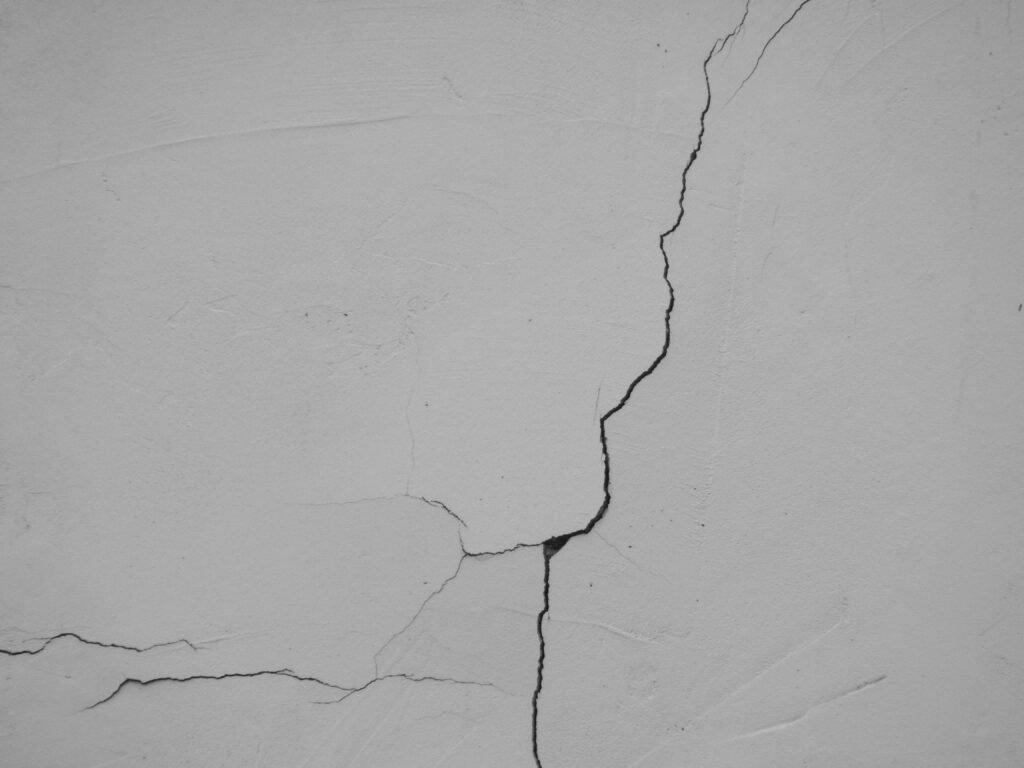
A crack is a visible break in a finish or structure, not a full explanation. A hairline drywall crack by a door might come from seasonal wood movement, local framing shrinkage, differential settlement, or a past repair that released stress. Similar uncertainty applies to a diagonal brick crack or a slight floor slope. What matters is context—the location, shape, width, timing, and whether the condition is changing.
Under the finishes, causes operate in the soil and along water paths as loads transfer into the ground. One house may see a corner drop where fill compresses, while another lifts seasonally as clay expands in wet months. Two near-identical homes on the same block can behave differently because of grading, irrigation schedules, tree placement, or utility work. Observing symptoms is useful, but tying them to a single cause without site data risks oversimplifying a complex system.
Support Conditions Change Over Time
The subsurface environment continues to evolve after construction. Soil moisture shifts with weather, seasons, and landscaping practices. Loads change when additions go up or heavy finishes are installed. Drainage can worsen when gutters clog, soils settle, pavements tilt, or a neighbor regrades. Hidden pipes can leak. Roots spread and compete for moisture. Small variations add up, especially when they are uneven around the perimeter.
Because conditions evolve, some movement appears soon after construction as disturbed soils adjust, while other changes surface years later when water patterns shift. Many homes experience minor seasonal responses that do not require structural work. The relevant questions are whether movement is ongoing, uneven, and affecting performance. Careful, dated documentation gives a clearer picture than a single snapshot.
Soil-Related Causes of Foundation Problems
Expansive Clay and Shrink-Swell Movement
Certain clays react strongly to moisture. When they absorb water, they can expand and lift portions of a foundation. When they dry, they can shrink and allow settlement. If moisture changes are not uniform, one side may heave or shrink more than another, creating differential movement. Rainfall patterns, concentrated roof runoff, landscaping routines, leaking pipes, and shading that alters evaporation can all drive these cycles.
Not every region has expansive soils, and reactivity varies widely from one deposit to the next. Even within a neighborhood, soil behavior can shift over short distances. Regional maps and laboratory values help frame risk but do not replace site-specific investigation. Where shrink-swell is relevant, the focus turns to moderating moisture variation. Consistent surface drainage, measured irrigation practices, and attention to how water is added or removed near the perimeter make a practical difference.
Compressible or Poorly Compacted Fill
Building pads are sometimes created with imported fill. If that material was not well graded and compacted, it can compress under building weight or when it becomes wet, reducing support in that zone. Settlement is often most noticeable where fill is thicker or more variable. In some layouts, only part of a footing or slab bears on fill while adjacent segments bear on native soil, and the contrast drives uneven movement.
Fill performance depends on composition, moisture during placement, compaction effort, and layer thickness. Backfill along basement walls can also settle if it contains debris or loose pockets. The visible pattern is usually downward movement rather than heave, yet this is a common trend, not a hard rule. Understanding original grades, the depth to native soil, and construction history helps set expectations.
Differential Settlement and Uneven Bearing
Settlement is downward ground movement caused by increased stress or long-term consolidation. Uniform settlement, where the entire foundation moves down together, may be subtle and go largely unnoticed. Differential settlement, where one area moves more than another, introduces stress that can show up as cracks, racked frames, binding doors, or sloped floors. Variability in soil layers, moisture differences, changes in load, and variations in foundation depth or geometry all contribute.
Shallow foundations that span contrasting bearing conditions—such as a corner over soft clay and another area over denser sand—can exhibit tilt or cracking that mirrors those contrasts. Recognizing differential behavior involves noting which portions move relative to others, the timing of change, and whether the rate appears stable, seasonal, or accelerating.
Buried Organic Material, Void Formation, and Erosion
Buried organic matter such as old stumps, roots, or construction debris can decay over time. As it breaks down, volume is lost, and small voids can develop, reducing support. Erosion may also remove fine particles in certain soils, gradually enlarging voids along persistent water paths. In karst terrain and other susceptible geologies, natural subsurface voids can preexist or expand.
These mechanisms often affect a small area rather than the whole structure. A single corner or short wall segment may drop or rotate, or a slab may bridge over a cavity until it eventually cracks. Triggers include redirected surface water, leaking utilities, or concentrated downspout discharge that finds a path beneath the slab. Where voids or erosion are suspected, first interrupt the water path, then assess how much support has changed.
Water and Drainage Causes of Foundation Problems
Roof Runoff, Gutters, and Downspouts
Roofs catch large volumes of water during storms. Missing, undersized, or clogged gutters allow water to fall directly at the perimeter. Downspouts that discharge beside the wall concentrate flow in one zone. Repeated wetting can alter soil moisture, soften certain soils, contribute to shrink-swell cycles, or carry away fines. Not every wet spot drives structural movement, yet unmanaged roof runoff is a frequent factor in perimeter moisture variation.
Keep gutters clean and aligned, and carry downspout discharge away from the foundation to reduce saturation cycles. Extensions, splash blocks, and well-positioned drains help manage flow. The goal is not perfectly dry soil—unrealistic in most climates—but predictable, controlled movement of water away from the building.
Negative Grading and Surface Ponding
Slopes that direct water toward the house push runoff against the foundation. Low spots near walls hold water after storms. Backfill can settle or landscaping can change over time, creating these conditions even if the original grading was acceptable. Persistent ponding raises the chance of moisture variation in sensitive soils and can increase seepage at joints or cracks.
Evaluate grading by watching during or after rain. Note where puddles form, how long they last, and whether they drain toward or away from the home. Modest regrading, adding soil to low areas, or installing swales and surface drains can help when tailored to the site. Avoid simply relocating water so that one problem area turns into another.
Groundwater and Hydrostatic Pressure
At some sites, the water table rises seasonally or after heavy precipitation. Saturated soils next to foundation walls can develop hydrostatic pressure, pushing laterally on basement walls and driving water through cracks or joints. Retaining walls and crawl space perimeters can face similar loading. The impact depends on wall design, backfill, drainage, and waterproofing details.
Addressing groundwater influence often requires perimeter drainage systems or relief measures, but specifics are highly site dependent. Distinguish surface water that can be redirected from groundwater that fluctuates from below. Confusing the two leads to solutions that miss the primary driver.
Exterior Drainage, Backfill, and Water Paths
Water follows the easiest route. Backfill around a foundation is commonly more permeable than undisturbed soil, so water introduced at grade can run down along the wall to seams and penetrations. If there is no collection system, water may accumulate or enter. Even with drains, siltation, damage, or root intrusion can reduce performance over time.
Patios, walks, window wells, edging, and landscaping influence these routes. A poorly sealed joint beside a wall can funnel water to the backfill zone. Understanding how surface features connect to subsurface paths helps target practical adjustments such as sealing joints, improving slopes, or adding collection points that fit the site layout.
Weather and Climate Causes of Foundation Problems
Drought and Soil Drying
Extended dry spells remove moisture from the ground through evaporation and plant uptake. In clay-rich or otherwise moisture-sensitive soils, this can cause near-surface shrinkage. When one side of the house dries more than another, support becomes uneven. The change may be gradual and can partially reverse during wetter months.
Drought interacts with existing grading, tree influence, irrigation routines, and building geometry. One home might show noticeable movement in a single zone, while a nearby property on different soils shows little change. Track timing and location to separate broad climate effects from site-specific contributors.
Wet-Dry Cycles and Uneven Moisture
Alternating wet and dry conditions amplify changes in moisture-sensitive soils. Repeated swelling and shrinkage stress finishes and joints, particularly where exposure is uneven around the footprint. Roof overhangs, sun and wind patterns, and irrigation that favors one side often explain these differences.
Many owners see seasonal sticking of doors or hairline drywall cracks that open and close. That can be normal building response. Concern increases when movements grow over time, concentrate in a particular area, or coincide with water intrusion or visible wall displacement.
Frost Heave in Susceptible Regions
In cold climates, freezing can form ice lenses in soil that lift the ground. Three elements typically align for frost heave to occur—freezing temperatures that reach the soil, frost-susceptible soils, and a supply of water. Shallow elements such as walkways, stoops, or flatwork near the home are most likely to move upward.
Foundation systems are usually placed below local frost depth, yet adjacent features and backfill zones can still be affected. Frost-related movement often follows seasonal timing and trends back toward original position after thawing. Proper drainage and insulation details help manage this risk, and local standards guide best practices.
Trees, Landscaping, and Watering Patterns
Root-Driven Moisture Changes
Trees draw water from the soil to support growth. In moisture-sensitive soils, that uptake can dry the ground near roots, with the effect more pronounced during drought. The pattern is irregular. A mature tree near one corner might influence only that zone depending on species, canopy size, and competing water sources. Roots can also track along joints or follow moisture paths, altering nearby drainage or utilities.
Strong concrete is rarely split by direct root pressure, but roots can change the moisture environment that supports the foundation. Whether the net effect matters depends on soil behavior, distance, root density, and how irrigation and rainfall balance root uptake. There is no universal planting distance that works for every property.
Irrigation, Planter Beds, and Localized Saturation
Sprinklers, drip lines, and planter beds can add water unevenly around a foundation. A bed that receives frequent watering beside one wall may keep soils wet on that side while the opposite side dries. Over time, the contrast can contribute to differential movement in moisture-sensitive soils. Overspray and pooling can also soften certain soils and move fine particles that support bearing.
Map where irrigation zones deliver water, how long each runs, and whether overspray hits walls or collects at the perimeter. Adjust schedules, relocate or change heads, or split zones to reduce extremes. Make changes gradually to avoid sharp shifts in moisture patterns.
Why Landscaping Effects Are Site-Specific
Landscaping variables pile up quickly. Soil type, grade, plant species, root depth, shade, mulch, and nearby hardscapes interact to create a unique moisture pattern at every home. A tree that has little impact at one site may drive noticeable change at another because the soils respond differently or irrigation is unbalanced.
Because of this variability, blanket rules about tree removal or watering are unreliable. Make adjustments in small steps and observe through seasons. Document conditions before and after changes to see whether the pattern stabilizes or continues to shift.
Construction and Utility Causes of Foundation Problems
Site Preparation and Compaction
Foundation performance starts with site preparation. Removing topsoil, placing structural fill, and compacting in controlled layers help create more uniform support. If steps are skipped or weather changes during construction, pockets of loose soil, trapped organic material, or variable density can result. Later, these pockets may compress or decay, allowing some portions of the foundation to move more than others.
Even with solid practices, trenches for utilities and perimeter backfill are disturbed zones that can settle. Knowing where these zones run explains why cracks or slopes often align with predictable lines such as a utility trench path or the outside edge of a backfilled wall.
Foundation Design, Loads, and Changes to the Structure
Foundations are designed based on expected loads and assumed soil conditions. If the design does not match actual site behavior, or if loads change significantly, movement can occur. Adding a second-story room, installing heavy stone veneer, or introducing a point load at a new column alters how stresses reach the soil. Transitions where footings change width or depth can also concentrate stress and become points of differential movement.
Not every addition causes trouble, but prior work matters. Plans and permits, when available, provide clues about footing sizes, wall thicknesses, and load paths. When new symptoms appear, consider what changed in the structure as well as what changed in the site.
Plumbing Leaks and Subsurface Water
Leaking supply or drain lines beneath or near a slab add water to the soil. Depending on soil type, the added water can soften the bearing layer, carry away fines, or create a saturated pocket that behaves differently from surrounding ground. Over time, the localized effect can produce settlement, heave in certain clays, or persistent dampness without major movement.
A suspected leak warrants investigation, but it is not proof of structural damage. The impact depends on how long the leak persisted, the flow rate, soil behavior, pipe depth, and overall drainage. Leak detection and repair address the source, then continued monitoring shows whether movement stabilizes.
Excavation, Utilities, and Nearby Ground Disturbance
Work near a home can alter support conditions. Excavation for a pool, a new utility trench, or development on an adjacent lot can change water paths or remove lateral support. Heavy equipment traffic can compact some areas and loosen others. Vibrations may disturb loose backfill or trigger minor settlement in susceptible soils.
Timing often connects the dots. If new symptoms appear soon after nearby ground disturbance, include that context in your notes. Sometimes the remedy is as simple as restoring grade or re-forming a compacted swale; more complex changes call for targeted assessment.
Signs That May Point to Foundation Movement
Cracks, Gaps, and Masonry Changes
Exterior brick or block may show stair-step cracks, vertical separations, or gaps at corners. Mortar joints can widen unevenly. Indoors, cracks can run from window corners, open at either the top or bottom of walls, or return in the same locations after patching. These patterns sometimes reflect movement, yet thermal expansion, normal framing shrinkage, or minor racking unrelated to the foundation can create similar lines.
Focus on change over time. Measure crack widths with a simple gauge or feeler, note dates, and re-photograph the same spots at regular intervals. Track whether cracks open and close seasonally, remain stable, or continue widening.
Doors, Windows, and Interior-Finish Changes
Doors that rub or latch differently, windows that stick, and trim that opens at miter joints suggest frame distortion. The driver may be foundation movement, humidity effects in framing, or localized issues such as hinge wear. Reversibility is informative. If a problem appears in dry months and eases during wetter periods, moisture variation likely plays a role.
Note which openings are affected, any pattern along specific walls, and how that correlates with weather or site changes like new irrigation routines. One stubborn door may be a nuisance. A cluster of changes on the same side of the house combined with matching exterior cracks deserves closer attention.
Floors, Basement Walls, and Moisture Clues
Sloped or uneven floors may result from joist deflection, subfloor issues, or foundation movement. Basement walls that bow inward, show horizontal cracking, or develop new dampness may be reacting to water or soil pressure. Efflorescence—the white residue left as water evaporates—signals moisture movement through masonry but not necessarily a structural problem.
Simple tools such as a level, a string line, or even a marble can reveal slope trends, while precise readings require instruments. Track whether slopes or wall deflections appear to change over time. In basements, log where water enters, which storms trigger it, and how quickly it clears.
Documenting Change Without Jumping to a Conclusion
Good records separate one-off events from trends. Keep a dated log that includes locations, weather conditions, irrigation schedules, and site actions such as gutter cleaning, grading work, or tree pruning. Photograph key areas with a ruler or coin for scale. Mark the ends of cracks with pencil and a date to see whether they extend.
Documentation does not replace professional evaluation where movement is active or conditions appear unsafe, such as pronounced wall bowing or sudden shifts. It provides the context any evaluator needs to understand what is happening at your home.
Reducing Future Risk Around a Foundation
Keep Surface Drainage Features Working
Direct water away from the foundation with basic maintenance. Keep gutters clear and aligned, maintain downspout extensions, and watch the perimeter for settled areas that create low spots. Check how patios, walks, and driveways shed water where they meet the home. During a rain, walk the perimeter to see where water flows and where it pools.
Small tasks matter, including resealing joints, restoring soil at settled edges, and adding splash blocks. Aim for steady, predictable water handling rather than perfectly dry soil, which is rarely achievable.
Investigate Suspected Plumbing Leaks Promptly
Unexplained moisture near the foundation, damp flooring over a slab, a sudden increase in water bills, or a meter that spins with fixtures closed all warrant a plumbing check. Finding and fixing leaks removes a potential contributor before it grows. After repair, continue tracking cracks, slopes, or wall movements to see whether conditions stabilize.
Not every plumbing issue affects structure. Decide how far to investigate based on observed changes, soil behavior, and foundation type. Leak detection is one part of understanding the broader picture.
Avoid Sudden Water-Pattern Changes Where Soil Is Sensitive
In moisture-sensitive soils, abrupt shifts can produce uneven responses. Turning off irrigation on one side while keeping it on elsewhere increases contrast. Likewise, adding a new soaker hose along one wall without adjusting other inputs can create a persistently wet band beside a dry field.
Make changes gradually and watch the response through at least one full season. Strive for consistent moisture exposure around the perimeter, and avoid concentrating water in a single area unless a designed drainage path will carry it away.
Consider Local Soil, Climate, and Site Conditions Before New Work
Before adding hardscaping, building an addition, or changing landscaping, consider how the work will alter water paths, loading, and soil exposure. A patio that tilts toward the house, a raised bed that holds water against a wall, or heavy cladding added to one facade can shift conditions in meaningful ways.
Local expertise and standards differ by region because soils and climates differ. Asking the right questions early helps prevent unintended imbalances. After any project, keep observing so you can catch small issues before they grow.
Frequently Asked Questions About Causes of Foundation Problems
What is the most common cause of foundation problems?
There is no single, universal cause. Many homeowners encounter a combination of moisture-sensitive soils and uneven water exposure from drainage, irrigation, or weather cycles. Others see movement tied to compressible fill or construction details. Because different mechanisms can produce similar signs, it is more useful to identify which categories are plausible at your site—soil behavior, water paths, recent changes—and then monitor and evaluate with that context.
Can poor drainage cause foundation problems?
Poor surface drainage can shift soil support and raise water pressure near foundations. Concentrated roof runoff, negative grading, and ponding along walls can increase moisture variation in susceptible soils and, in some conditions, add lateral pressure on basement walls. Not every puddle leads to structural damage, but improving surface water management reduces a common contributor.
Can tree roots cause foundation problems?
Tree roots influence soil moisture by drawing water, which can matter where soils are moisture sensitive. Roots may also follow moisture paths or interact with drains, changing local conditions. The effect varies by species, soil, climate, and irrigation. Rather than assuming roots are the direct cause, evaluate them as one element of the broader soil and water system, and make adjustments gradually while you observe the response.
Can a plumbing leak cause foundation problems?
A plumbing leak beneath or near a slab can add water that softens some soils, carries away fine particles, or changes moisture balance enough to affect support. The outcome depends on leak duration, flow rate, soil type, and drainage conditions. Some leaks cause only dampness with no structural impact. If you suspect a leak, prompt investigation makes sense, followed by continued monitoring to see whether movement stabilizes after the source is addressed.
The Bottom Line on Causes of Foundation Problems
Causes of foundation problems are rarely singular or simple. Soil behavior, water and drainage, weather patterns, trees and landscaping, construction conditions, plumbing leaks, and nearby ground disturbance can each play a role, sometimes in combination. Signs such as cracks, sticking doors, or damp walls are valuable clues, yet they do not point to one explanation on their own.
Use this guide to organize what may be relevant at your property. Document what you see, watch for change over time, and consider how soil, climate, drainage, and construction history create your site’s specific context. Where movement is active or safety is in doubt, seek an evaluation that matches your conditions. Clear information and measured, site-aware steps are the most reliable path to understanding and managing risk around a foundation.
Also Read