Key Takeaways
- Foundation cracks are common, but orientation, width, location, movement, and related clues carry more weight than any one feature.
- Hairline vertical cracks can occur as concrete cures; horizontal, stair-step, widening, offset, or leaking cracks call for closer review.
- Recording conditions and managing water near the foundation are smart first steps, yet a visual check cannot confirm structural safety.
- Seek prompt professional input when a wall bows, a crack grows, water enters, or other signs of movement appear.
Homeowners often discover foundation cracks in basements or crawlspaces. Some lines reflect routine concrete shrinkage or minor movement, while others point to soil or water pressure, or uneven settlement that warrants timely attention. This guide shows you how to read a crack’s pattern, context, and changes so you can choose sensible next steps without guessing about structural safety.
Orientation, location, width, offset, and change over time matter more than any single number. By documenting what you observe, tackling clear moisture problems, and knowing when to call a professional, you can protect your home and avoid unnecessary alarm. The goal is a practical, informed approach that keeps risk in perspective.
What Are Foundation Cracks?
Foundation cracks are separations or fractures in concrete, concrete block, brick, or slab-on-grade floors. They may be straight or irregular, vertical, horizontal, or diagonal, follow mortar joints in masonry, or show up as isolated hairlines in poured concrete. A single line reveals only part of the story; the rest comes from noting whether it leaks, whether the surfaces remain even, and whether the line changes with time or seasons.
Foundations move because houses and soils respond to curing, temperature swings, moisture changes, and varying loads. A homeowner’s role is not to determine structural capacity, but to recognize patterns that look routine versus signs of active pressure or ongoing movement that deserve a closer look. Thinking in terms of patterns rather than isolated facts leads to better decisions.
Why Concrete and Masonry Crack
Concrete resists compression well but is weaker in tension. As fresh concrete cures, it loses moisture and shrinks slightly, which can create tension that appears as hairline surface cracks, especially in long wall or slab sections. Reinforcement, joints, and good curing practices guide where cracks form, yet they do not remove the possibility altogether.
Masonry walls built with concrete block or brick rely on mortar joints. Those joints are typically the path of least resistance, so cracks often step along them instead of cutting across the units. Shifts in temperature, moisture, and loading can open or close joints. While a small stepped line may fit normal movement, widening or offset along a joint can signal a change in support or lateral pressure that needs attention.
Why Context Matters More Than a Single Measurement
Relying on a single dimension, such as width, to judge severity is tempting but incomplete. In practice, orientation, location, offset, moisture, and movement over time provide a more reliable picture. A narrow, dry, vertical hairline in a poured wall can match curing shrinkage, whereas a similar-width horizontal line on a below-grade wall with damp staining may point to soil or water pressure.
Change is the key signal to monitor. A crack that lengthens, widens, or develops new offset suggests active movement. Associated clues—such as a wall that is no longer plumb, water seepage, efflorescence, or interior issues like sticking doors—help connect dots. Because the structure and surrounding soils act as a system, interpreting several details together beats focusing on a single metric.
Types of Foundation Cracks and What They May Suggest
Sorting a crack by its pattern helps you decide what to check next. The descriptions below are tendencies, not diagnoses. If a crack is changing, leaking, or paired with other concerns, seek a professional opinion tailored to your home and site.
Hairline and Vertical Foundation Cracks
Hairline cracks commonly appear in new poured concrete as the material cures and shrinks. They often show within the first year as thin vertical or slightly diagonal lines with no meaningful offset. Many remain stable, especially when reinforcement is adequate and exterior drainage keeps soils from becoming saturated.
Vertical cracks may also reflect minor settlement as loads distribute and soils consolidate. They often appear near the mid-span of a long wall or around openings such as basement windows. Even when they look typical, record their location, note any seasonal dampness, and watch for change. If a previously dry vertical line begins to leak, improve drainage and consider a sealing method appropriate to the material and conditions.
Horizontal Foundation Cracks
Horizontal lines along a below-grade wall deserve careful attention because they can indicate lateral pressure from saturated soils, hydrostatic buildup, or frost-related expansion. These pressures act perpendicular to the wall, and a horizontal crack can form where bending stress is highest. If the wall bows inward, shows offset along the line, or exhibits dampness or efflorescence, the concern increases.
Severity depends on wall thickness, reinforcement, soil type, and water conditions. A horizontal line near the top courses of block may reflect movement where the wall meets the sill plate or floor framing, while a line near mid-height can indicate bending from outside pressure. Because lateral loads carry higher stakes, a prompt evaluation by a qualified professional is appropriate, particularly if there is visible distortion.
Diagonal Foundation Cracks
Diagonal cracks often reflect differential movement. When one part of a foundation settles more than another, stress takes a path that is neither purely vertical nor purely horizontal. Diagonal lines frequently run from corners downward toward the center of a wall, or from openings at an angle toward the slab or footing.
Context sharpens interpretation. A short diagonal near a corner may align with shrinkage or drying patterns; a longer, widening diagonal that crosses multiple blocks or bricks can indicate settlement or rotation at a footing. Track whether the gap widens toward the top or bottom, whether one side has shifted in or out, and whether nearby finishes—drywall, trim, tile—show related movement.
Stair-Step Cracks in Block or Brick Foundations
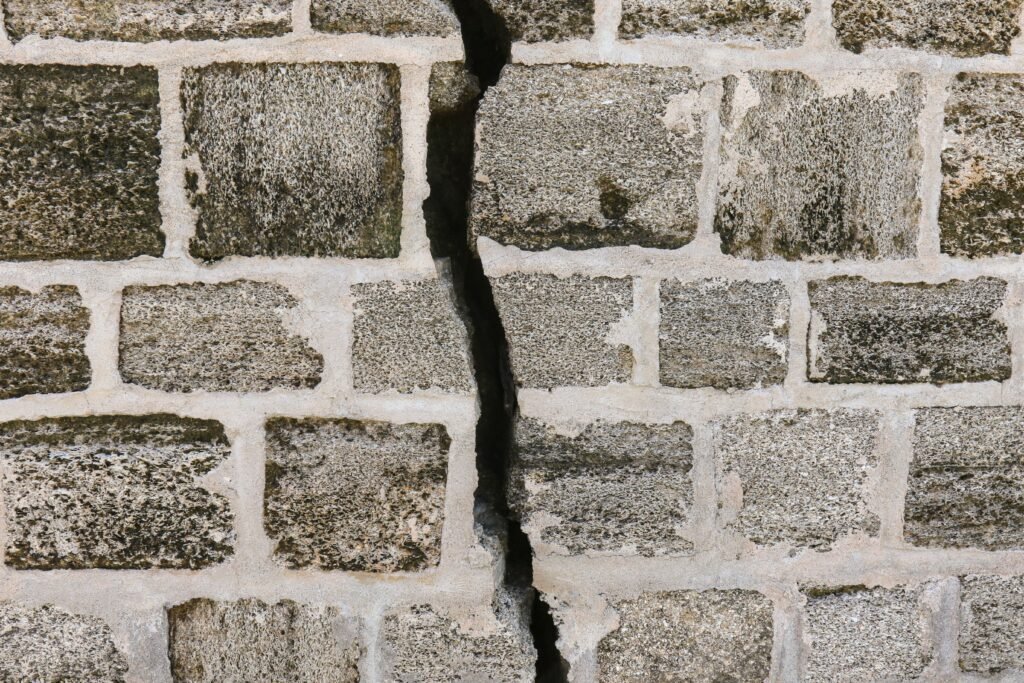
Stair-step cracks trace mortar joints in concrete block or brick, creating a stepped pattern of short horizontal and vertical segments. Because joints are weaker than units, they open first as stress builds. A tight, short stair-step line with no offset may fit normal movement in some settings, but growth or displacement across the steps warrants attention.
Widening direction offers clues. If a stair-step crack widens toward the top, that can indicate downward movement or rotation at a corner. If it widens toward the bottom, upward pressure or heave may be involved. Water staining along the steps highlights moisture pathways to address regardless of structural implications. When combined with exterior gaps at brickwork or interior sticking doors, stair-step cracks often justify a professional assessment.
Slab Cracks and Cracks With Displacement
Slab-on-grade floors, garage slabs, and basement slabs can develop cracks from shrinkage, temperature swings, or localized settlement. Hairline map cracking or straight lines near control joints can be typical, particularly when surface moisture is controlled. Cracks that cross a slab and create a slight height difference can indicate movement below, sometimes caused by soil changes, voids, or erosion from water.
Displacement is a red flag in any foundation element. If surfaces on either side of a crack are no longer in the same plane, that points to movement beyond simple opening and closing. In walls, displacement may come with bowing or leaning. In slabs, it can present as trip hazards, rubbing doors, or gaps that reappear after cosmetic fixes. Document offset carefully, monitor for change, and seek guidance when displacement is present.
What Causes Foundation Cracks?
Most foundation cracks trace back to interacting factors: how concrete behaves as it cures, how soils gain or lose moisture, how water collects against the foundation, and how construction details handle loads and movement. Understanding these mechanisms helps you match observations to practical next steps.
Concrete Shrinkage and Normal Settling
As concrete cures, it releases water and shrinks slightly. When restrained by reinforcement, backfill, or wall geometry, that shrinkage creates tension that often manifests as hairline cracks. These lines are common during the first year and may never progress if the wall is sound and well reinforced.
Normal settling describes minor consolidation of soils and slight adjustments in load paths as a new house stabilizes. This process can open or close small cracks without affecting performance. Stability over time is the differentiator: a small, unchanging, dry line with no offset is a different scenario from a crack that grows, leaks, or causes binding doors.
Soil Movement and Differential Settlement
Soils vary widely. Expansive clays swell when wet and shrink when dry, sandy soils can shift with erosion, and poorly compacted fill may consolidate unevenly under load. When one section of a footing loses support faster than another, differential settlement results. That uneven movement produces stress that can show up as diagonal or stair-step cracks, sloped floors, or gaps at trim and exterior cladding.
Site history matters, too. Additions on different footing depths, nearby excavations, altered grading, or even utility trenching can change how loads transfer to the ground. Tree removal or new plantings can shift soil moisture balance. When several influences interact, cracks may appear even in older homes that were stable for years.
Water, Drainage, and Hydrostatic Pressure
Water frequently drives foundation problems. If surface runoff flows toward the house, gutters overflow near the foundation, or downspouts discharge at the base of walls, surrounding soils can become saturated. Saturated soils press laterally on below-grade walls and can force water through small openings. Over time, this can contribute to horizontal lines, bowing, and leaks.
Hydrostatic pressure arises when water cannot drain and builds against a wall or beneath a slab. Window wells without drains, clogged footing drains, or high water tables can elevate this pressure. Even if a wall or slab is structurally adequate, water will exploit pores and hairline cracks. Directing water away from the home is one of the most effective preventive measures homeowners can take.
Climate, Construction, Roots, and Plumbing Issues
Freeze-thaw cycles can shift soils as moisture expands when frozen and contracts on thaw. Repeated cycles stress walls and footings, especially where backfill holds water. In hot, dry periods, some clays shrink and pull away from foundations, then swell with rain. These seasonal swings can open and close cracks and should factor into how you interpret changes.
Construction details play a part as well. Insufficient reinforcement, missing control joints in slabs, or inconsistent footing depth can concentrate stress. Nearby trees and large shrubs, while valuable for shade, draw moisture from the soil and can alter conditions around the foundation. Plumbing leaks—especially slow, hidden ones below a slab or near a footing—can saturate soils and create voids. Addressing these contributors helps the structure and soils behave more predictably.
When Are Foundation Cracks a Warning Sign?
Many cracks do not indicate a structural emergency. Risk increases when a crack occurs alongside wall distortion, offset, persistent water entry, or interior symptoms. Watching for combinations of clues helps you decide when to move from monitoring to professional evaluation.
Crack Changes That Need Prompt Attention
A crack that lengthens, widens, or branches signals changing conditions. If a previously tight line begins to accept the tip of a pencil or a feeler gauge where it did not before, note the date, take photos, and consider escalating your assessment. New offset—where one side of the crack no longer aligns with the other—also points to active movement.
Repeated failure of cosmetic fixes is another flag. If patching, caulking, or paint lines re-crack in the same place, or if a sealed line leaks again without a clear trigger, the underlying mechanism may still be active. When several cracks appear in a short period, or when multiple indicators cluster in one area, prompt attention is prudent.
Wall Distortion, Water Entry, and Interior Symptoms
Visible distortion raises urgency. A wall that bows inward, leans, or shows a horizontal crack with an inward step in block courses suggests lateral pressure that a visual check alone cannot resolve. Persistent water entry through a crack, damp staining, or white mineral deposits indicates moisture movement and a need to address drainage.
Interior symptoms often accompany foundation changes. Doors and windows that begin to stick, floors that feel newly out of level, gaps that appear at baseboards or crown molding, and diagonal cracks in drywall near window or door corners can relate to foundation movement. A single symptom may be benign, but patterns across several areas of the house deserve a closer look.
When to Contact a Structural Engineer or Foundation Professional
Seek professional evaluation when you see horizontal cracking, bowing or leaning walls, displacement across a crack, persistent water intrusion, or rapid change. Safety concerns—such as significant wall movement or sudden new deformation—are not DIY scenarios. A licensed structural engineer can interpret how the structure and soils interact, determine whether movement is active, and recommend a repair scope tailored to the building.
Qualified foundation contractors carry out foundation crack repairs and moisture-management measures based on that diagnosis. Often, a coordinated approach works best: engineering input matches the fix to the cause, and a contractor’s field expertise ensures practical installation that suits site conditions and local codes.
How to Inspect and Monitor Foundation Cracks
A careful, step-by-step look at a crack and its surroundings yields the best information to share with a professional, if needed. Focus on documenting what exists now, then watch for change.
Document the Crack Before It Changes
Begin with clear, dated photos taken straight on and at an angle to show depth. Include a ruler, tape measure, or a common object for scale. Capture the full length of the crack and close-ups of any segments that look different—wider areas, corners, or spots with water marks.
Make a simple sketch marking the crack’s position on the wall or slab, distances from corners or openings, and the direction it runs. Note whether the two sides are level or offset. If safe and practical, lightly mark the ends with a pencil and record the date. Compare new photos and notes over time to see whether the line grows, shifts, or leaks.
Check the Area Around the Home
Step outside during or after a moderate rain and watch how water moves. Look for overflowing gutters, downspouts that release near the foundation, and splashback that soaks soils at the base of walls. Check whether the ground slopes away from the house or toward it, and whether low spots collect water that could migrate toward the foundation.
Inspect window wells, hose bibs, and irrigation zones for leaks or poor drainage. Indoors, look for damp stains, musty odors, or efflorescence on foundation walls. Note nearby trees and large plantings that might influence soil moisture. If slabs are cracked, look for voids under edges, signs of washout, or areas where soils have pulled away from slab perimeters.
What Not to Do During a DIY Evaluation
Do not chip at a crack, drill into the wall, or pry at edges to test strength; those actions can worsen conditions and erase useful clues. Avoid excavating around the foundation without a plan, and do not remove soil that provides lateral support. Never try to force a bowed wall back into alignment.
Do not seal a line before documenting it and considering water and soil influences. Premature sealing can hide changes and trap moisture. Do not shut off sump pumps or dehumidifiers to “test” leak paths, and do not block required vents. When uncertain, pause and seek guidance rather than taking steps that could complicate a later professional assessment.
Foundation Crack Repair: Match the Fix to the Cause
Effective foundation repair starts with understanding why a crack formed and whether movement is ongoing. A cosmetic patch will not hold if external pressure or settlement continues, and added reinforcement alone will not solve a drainage problem. The right plan often blends sealing, water management, and stabilization.
Sealing Stable, Non-Structural Cracks
For small, stable cracks in poured concrete, professional crack injection is a common option. Epoxy can bond the two sides and restore continuity, while polyurethane foams expand to fill voids and block water paths. These methods work best when the line is clean, the wall is suitably dry for the chosen material, and the assembly is otherwise stable.
In masonry, tuckpointing loose mortar or applying compatible sealants can close minor joints that are not moving. Surface patches with hydraulic-type cements may slow seepage, but they are not substitutes for correcting exterior moisture sources. Before sealing, confirm through documentation that the line is not changing and that broader causes—such as drainage—have been addressed.
Addressing Water and Drainage Problems
Many leak paths and pressure issues improve when water is routed away from the foundation. Keep gutters clear, extend downspouts to discharge several feet from the house, and restore positive grading so soil slopes away. On some properties, shallow swales or surface drains can steer runoff to safe discharge points.
Where below-grade water persists, options include exterior waterproofing membranes with drainage boards, footing drains that route water to daylight or a sump, or interior perimeter drains that collect and pump groundwater away. Window well drains, well covers, and improved backfill profiles further reduce water contact with the wall. The best setup depends on site characteristics, climate, and local requirements.
Structural Stabilization and Underpinning
When lateral pressure or settlement drives cracking, stabilization targets the mechanism. For bowing or leaning walls, reinforcement methods may include carbon-fiber strips bonded to the wall, interior steel braces, wall anchors engaging stable soils, or tiebacks that resist lateral loads. Selection depends on wall type, access, extent of movement, and project constraints.
For settling foundations, underpinning transfers loads to stronger soils or bedrock. Systems include helical piers, push piers, and drilled piers, chosen based on soil conditions and structural needs. For settled slabs, lifting techniques—often called slabjacking or polyurethane foam lifting—can fill voids and re-level surfaces. These measures should follow engineering guidance so the repair addresses the cause, not just the symptom.
Why Repair Costs Vary
Scope and cost change with the cause of cracking, the extent of movement, foundation type, access limits, drainage needs, local codes, and whether engineering design is required. Work on a tight urban lot with deep footings and a high water table differs greatly from a shallow footing on an open site with easy equipment access.
Material choices, labor markets, and the need to combine structural and waterproofing measures also influence totals. Broad price ranges are seldom useful. An on-site evaluation produces a plan matched to actual conditions—the most reliable basis for time and budget.
How to Help Prevent Future Foundation Cracks
While not every crack is preventable, steady moisture management and thoughtful maintenance reduce the risk of movement and water-related damage. Aim to keep soil conditions around the foundation as consistent as practical and to move water away from the structure.
Manage Roof Runoff and Surface Water
Keep gutters clear so they capture roof water rather than spilling it against the foundation. Ensure downspouts connect securely and discharge well away from the house, using extensions or splash blocks to carry water to lower ground. Where safe and permitted, direct sump and downspout discharge to areas that can absorb or convey water without sending it back toward the home.
Regrade settled soil that has created back-pitched surfaces. A gentle slope away from the foundation prevents ponding that can soak backfill and increase pressure. At driveways, patios, and walkways, confirm joints and edges do not funnel water toward the house. If needed, consider surface drains or shallow swales that guide runoff along a controlled path.
Maintain Consistent Conditions Around the Foundation
Large swings in soil moisture can stress foundations, especially in expansive clays. Set irrigation to support plants without saturating soils near the foundation. Avoid concentrating sprinklers at the base of walls or running schedules that keep soils continually wet against the home. During dry spells, moderating extreme drying near the foundation can help soils transition more gradually.
Plant trees and large shrubs at distances suited to their mature root systems, and maintain them so roots and moisture uptake remain balanced. Keep mulch and soil below siding and weep holes, and avoid stacking firewood or dense landscaping features against the foundation that can trap moisture.
Address Small Changes Before They Become Larger Problems
Walk the perimeter a few times a year to spot early changes. Refill eroded soil away from the wall, repair small caulk joints above grade where water could enter, and maintain window wells and covers. Indoors, note new hairline cracks and add them to your records with dates and locations.
Early, targeted corrections often prevent bigger projects later. If monitoring shows growth, or if drainage upgrades do not stop dampness, seek a professional opinion. A brief consultation can confirm whether conditions are stable or whether a targeted intervention would reduce risk.
Frequently Asked Questions About Foundation Cracks
Homeowners often ask similar questions after spotting a line in a wall or floor. The answers below outline general principles while acknowledging that each property is unique.
Are foundation cracks normal?
Some foundation cracks align with how concrete and masonry behave. Hairline vertical cracks in newer poured walls often reflect curing shrinkage and may never progress. Small, stable lines that stay dry and show no offset are common findings during routine inspections.
What makes a crack more concerning is change, wall distortion, water entry, or interior symptoms. A horizontal line on a below-grade wall, a stair-step pattern that widens, or a crack with offset deserves a closer look. When uncertain, document, manage water, and seek professional assessment.
Can I repair foundation cracks myself?
Homeowners can handle documentation and basic moisture management, such as cleaning gutters and extending downspouts. For a small, stable, dry crack in poured concrete, a homeowner-grade sealant may be considered to reduce seepage, provided the line is documented and not changing.
Structural diagnosis is not a DIY task. If water intrudes through a crack, if a wall bows or leans, or if a line grows or shows offset, contact a qualified professional. Matching the repair to the cause is essential, and many structural or waterproofing solutions require specialized materials, techniques, and permits.
Do foundation cracks always mean a house is settling?
No. Cracks can result from curing shrinkage, temperature swings, localized soil movement, or water pressure without widespread settlement. The term settling can mislead because it implies a uniform drop. The greater concern is differential settlement, where one part of the foundation moves differently than another.
Patterns help distinguish these scenarios. Diagonal or stair-step cracks that widen or coincide with sloping floors and sticking doors may reflect uneven support. A thin vertical hairline in a newer poured wall often reflects shrinkage. Context and change over time are more informative than the existence of a crack alone.
Should I buy a house with foundation cracks?
A crack does not automatically make a house a poor purchase. Many homes have minor, stable cracks that pose little risk when water is well managed. The key is understanding what the line indicates. Ask for documentation, look for signs of change, review any past evaluations or repairs, and consider a pre-purchase inspection by a qualified professional.
If visible clues suggest active movement, water intrusion, or wall distortion, a structural engineer’s assessment clarifies risk and repair scope. With solid information, you can decide whether the condition is acceptable, whether to negotiate for repairs, or whether to continue your search.
The Bottom Line on Foundation Cracks
Foundation cracks are signals. Some reflect normal behavior in concrete and masonry, while others point to water pressure, soil movement, or uneven settlement that requires attention. The practical path is to document what you see, move water away from the foundation, and watch for combinations of warning signs such as horizontal lines, offset, bowing, leaks, and interior symptoms.
Visual inspection alone cannot confirm structural safety. When a crack changes, when water intrudes, or when a wall distorts, timely evaluation by a structural engineer or a qualified foundation professional helps match the solution to the cause. With steady maintenance and informed choices, most homeowners can manage foundation cracks without unnecessary worry.