Key Takeaways
- Polyjacking, also called foam jacking or polyurethane concrete lifting, is used for certain settled horizontal concrete slabs and flatwork.
- The approach introduces expanding polyurethane beneath a slab to occupy voids, improve bearing support, and, when conditions allow, produce controlled lift.
- It is often considered for sidewalks, driveways, patios, garage floors, steps, and some commercial slabs, subject to the slab’s condition and the subbase.
- Polyjacking is different from deep foundation repair and does not resolve every soil, drainage, structural, or slab issue.
What Is Polyjacking?
Polyjacking, foam jacking, and polyurethane concrete lifting
Polyjacking is a concrete slab lifting and stabilization method that places an expanding polyurethane material beneath the slab through small access points. You may also hear it referred to as foam jacking, polyurethane foam lifting, or polyurethane concrete leveling. The concept is straightforward: when a slab settles because of shallow subbase problems or develops voids beneath it, carefully managed expansion under the concrete can fill gaps, improve contact, and, in suitable cases, raise the slab toward a more functional elevation.
This overview offers general education for homeowners on how polyurethane-based slab lifting is commonly applied to sidewalks, driveways, patios, garage floors, and related flatwork. It is not a site-specific slab diagnosis, subbase evaluation, foundation assessment, structural evaluation, drainage design, repair specification, injection plan, safety clearance, financial recommendation, or contractor recommendation. Local codes, utility locations, and field conditions must always be verified before any work proceeds.
What the method is designed to do
The method is intended to address loss of support under horizontal concrete by placing a material that expands in place. As the polyurethane grows, it can fill open spaces, press upward against the slab, and generate lift when the slab and subbase allow for controlled movement. In other projects, the priority is stabilization rather than visible elevation change, with the aim of improving contact, calming rocking, and reducing ongoing movement under traffic.
Because the work proceeds through small holes made from above, the goal is to keep the existing slab instead of demolishing and replacing it. The process does not mend cracks or reverse structural damage inside the concrete. Surface cracking may still call for separate cosmetic repair or joint sealing. Results depend on slab integrity, subbase stability, moisture, temperature, and the pattern and cause of settlement.
Polyjacking is not deep foundation repair
Polyurethane slab lifting is different from underpinning a home’s structural foundation. Deep foundation repair focuses on stabilizing or supporting footings, grade beams, or load-bearing walls using elements such as piers or piles that carry loads to deeper, stronger soils. Polyjacking, by contrast, addresses slabs-on-grade and other flatwork that do not act as primary structural footings.
If movement stems from broad foundation settlement, lateral soil pressure, expansive soils affecting footings, or slope instability, slab lifting will not solve the underlying issue. In those circumstances, a broader structural and geotechnical evaluation may be necessary to define an appropriate scope of work beyond slab lifting. Distinguishing a slab-on-grade problem from a structural foundation problem is a necessary first step.
How Polyjacking Works at a High Level
Void filling, subbase support, and controlled slab lift
At a high level, technicians create planned access points through the slab and inject a two-part polyurethane that expands beneath the concrete. As expansion occurs, the material can occupy certain voids, increase bearing contact, and apply upward force. Crews watch the slab’s response in real time and adjust placements to pursue the target outcome, whether that is improved support, reduced rocking, or a measured amount of lift. Afterward, the access holes are patched.
Subsurface behavior follows physics and the specific geometry of voids, which can vary from panel to panel. The process is intentionally incremental and observational, acknowledging that material may follow the path of least resistance and that conditions below grade are only partially known even after investigation.
Why slab condition and settlement cause matter
The chance of a useful lift or stabilization outcome depends on the cause of settlement and the slab’s condition. Common shallow contributors include inadequate subbase compaction, erosion due to poor drainage, and soil loss around utilities. If the slab is largely intact and the subbase can carry renewed support, a controlled lift may be feasible. When the slab is thin, heavily fractured, or separated into many pieces, lifting may be ineffective or could widen gaps.
The settlement pattern also guides planning. Edge settlement at a driveway apron calls for a different approach than a bowl-shaped depression across a garage floor. In every case, mitigating the water and soil conditions that led to movement is central to reducing future settlement risk, regardless of which lifting method is chosen.
Why the process requires experienced evaluation
Polyurethane slab lifting is not a do-it-yourself (DIY) activity. Hidden voids, irregular subbase geometry, nearby structures, utilities, and the behavior of expanding material all demand experience and judgment. Technicians must observe the slab’s reaction and adjust sequence and placement to retain control. Without that skill, it is easy to move a slab unevenly or push material into unintended cavities.
Before work begins, a responsible evaluation reviews slab thickness, reinforcement where visible, crack patterns, drainage, potential utility conflicts, and access constraints. This overview is not a plan for your property and does not provide safety clearances, step-by-step instructions, or material specifications. Conditions vary widely, and feasibility depends on what is actually present beneath the slab.
Where Polyjacking May Be Used
Sidewalks, walkways, and steps
Sidewalk panels and walkways often settle at joints or along edges, creating trip hazards and areas where water ponds. Foam-based slab lifting is frequently considered in these situations because access holes are small, disturbance to landscaping can be limited, and individual panels can sometimes be adjusted relative to neighbors. With steps, the focus is on reducing uneven riser heights or addressing a sunken landing, provided the concrete is largely intact and the subbase can be supported.
Driveways, patios, and pool decks
Driveways and patios commonly experience edge settlement where water concentrates or where fill was not well compacted. Around pool decks, soil washout and plumbing trenches can leave voids. In these contexts, polyurethane placement may fill voids and allow a measured lift to improve drainage away from structures or reduce trip edges. Attention to joints, nearby utilities, and water management is important, and any surrounding drainage issues should be addressed so the same problems do not return.
Garage floors, interior slabs, and commercial flatwork
Interior slabs-on-grade in garages, basements, and commercial spaces can settle over poorly compacted fill or along utility corridors. Foam-based support may be used to reduce rocking and bring panels closer to their intended elevation, often without large-scale demolition. In commercial settings, the technique is applied for aisles, warehouse slabs, and production floors, with planning tailored to operations, access limits, and the specific slab and subbase conditions on site.
Void filling and stabilization without a major elevation change
Not every project targets a large lift. In some cases, the goal is to fill significant voids to stabilize a slab that already sits at an acceptable height but lacks uniform support. Examples include areas where water has undermined a slab edge, leaving a hollow that causes vibration or stress cracking under traffic. The emphasis in these scenarios is on restoring contact and reducing movement rather than shifting elevation.
What to Evaluate Before Polyjacking
Slab integrity and crack pattern
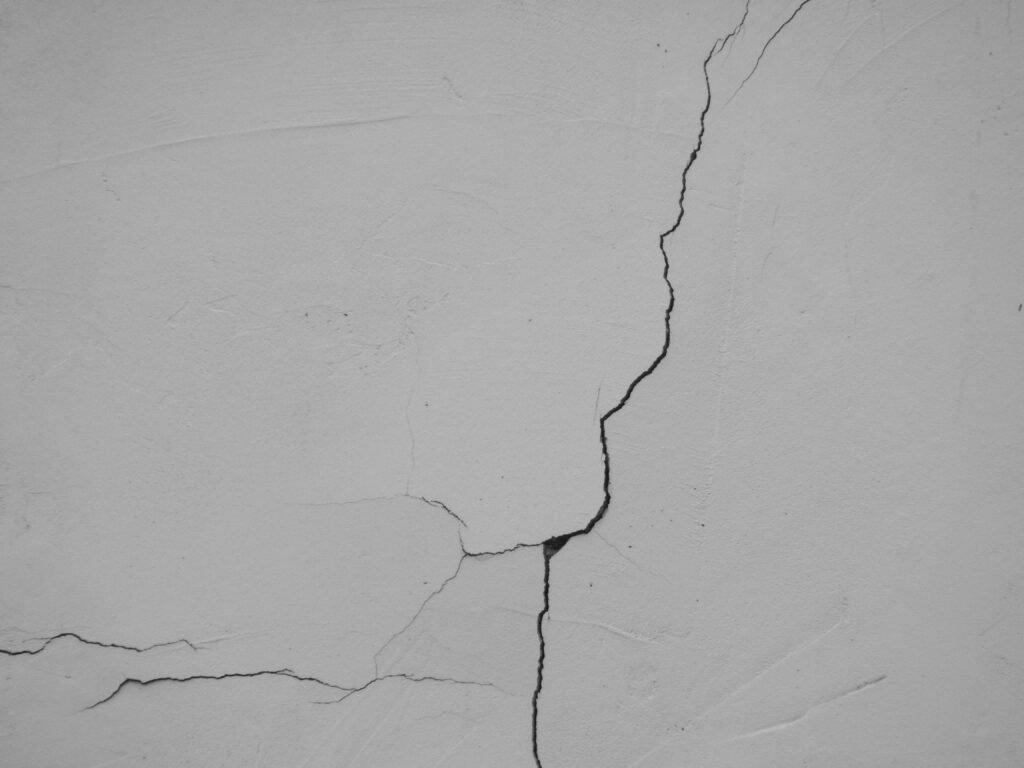
A careful look at slab integrity helps set realistic expectations. Hairline or isolated cracks may reflect normal shrinkage or limited movement, whereas wide, displaced, or intersecting cracks can indicate fragmentation. If the slab has broken into several independent pieces, lifting may cause differential movement or expose new separations. Slab thickness, reinforcement, and the presence of dowels at joints also influence how a slab responds to upward pressure.
Drainage, erosion, soil loss, and compaction
Water is a frequent driver of slab problems. Downspout discharge, negative grading toward a slab, leaking irrigation, or concentrated runoff can cause erosion and soil loss, leaving voids beneath concrete. Raising a slab without correcting these drivers tends to invite repeat movement. Evaluating surface drainage, gutters and downspouts, soil compaction, and nearby water sources is necessary for any long-term plan to limit future settlement.
Voids, utilities, and access
A responsible evaluation accounts for known or suspected voids as well as underground utilities and embedded systems. Radiant floor heat, plumbing lines, electrical conduits, and gas lines may run under or within slabs, and knowing their location matters. Access for equipment and the ability to work safely in the space also affect feasibility. In tight interiors or near delicate finishes, the work approach and patching plan should be reviewed alongside goals for lift or stabilization.
Signs that may point beyond slab lifting
Some patterns signal a problem that extends past flatwork. Stair-step cracks in masonry walls, widespread door and window misalignment, chimney lean, bowing basement walls, or floors sloping across entire rooms can indicate foundation movement or lateral soil pressure, not a simple slab-on-grade issue. In those cases, a broader structural or geotechnical evaluation may be required before any slab-leveling approach is considered.
Polyjacking Versus Mudjacking
Material and weight differences
Polyurethane-based lifting uses a lightweight expanding material, while mudjacking employs a cementitious or soil-based slurry. A slurry can add substantial weight compared with many polyurethane formulations. Where subbases are already weakened by poor compaction or moisture, added weight can be a key consideration. Conversely, a well-placed slurry can create broad contact under certain conditions. Material choice should reflect slab condition, void geometry, and the subbase’s capacity to accept added load.
Access points, curing, and work-site considerations
Foam-based lifting typically uses smaller access holes than most slurry methods, which some owners prefer for appearance and reduced disturbance. Job-site footprint, mixing requirements, and cleanup differ between techniques. Return-to-use timing is project specific and depends on material behavior, temperature, slab condition, and the goals of the work. Plan timing as part of the scope discussion rather than assuming one approach is always faster.
Subbase conditions and future settlement risk
Neither method automatically fixes the root cause of settlement. If water continues to erode soil or compaction remains poor, future movement is possible regardless of the material used. Foam can move into certain voids and bridge gaps but may follow easier pathways and not uniformly fill every cavity. A slurry may establish broad contact yet introduces added mass. Long-term performance in either case hinges on drainage and soil behavior at the site.
Why neither method is automatically better
The better fit depends on the objective, slab construction, void characteristics, access limitations, environmental conditions, visual priorities, and tolerance for patch appearance. In some projects, polyurethane’s low weight and small access points are attractive. In others, a cementitious fill may align better with the goals. Because conditions vary, compare approaches against your specific objectives rather than assuming one universal solution.
Potential Advantages and Tradeoffs
Limited excavation and retaining the existing slab
A key advantage of slab lifting is the chance to correct issues without removing and replacing concrete. Keeping the existing slab can preserve finishes, saw-cut patterns, and landscaping, and it can reduce disruption around steps, handrails, or adjacent walls. The tradeoff is that patch points remain visible, and perfect alignment with adjoining panels is not always achievable. Results depend on how the slab responds to incremental lift and on the support provided by the subbase.
Lightweight material and controlled application
Polyurethane approaches are valued for low weight and the ability to make incremental placements while watching the slab’s behavior. This control can help target problem areas. The tradeoff is that expanding material can move unpredictably in complex voids or follow the easiest pathway, which may not match the ideal plan. Achieving a uniform outcome below grade carries inherent uncertainty, and experienced oversight is needed to manage the process.
Cost and suitability are project specific
Cost comparisons between slab lifting and full replacement, or between foam-based and slurry-based methods, are project specific. Scope, access, site constraints, slab condition, and objectives all influence suitability. For example, a slab in good shape with shallow, well-defined voids may be a better candidate for lifting than a shattered slab over unstable, water-affected soils. Because results are not guaranteed and goals may change as conditions are uncovered, build flexibility into expectations and budget planning.
Material, environment, and cleanup considerations
Polyurethane products are manufactured chemicals that expand in place. Odors during mixing and placement can vary, so ventilation and timing figure into planning for interior spaces. Temperature and moisture influence both material behavior and slab response. Cleanup typically involves patching access points and addressing any joint sealing needed to direct surface water. Patch color and the visibility of drill points should be considered as part of the final aesthetic.
Limitations of Polyjacking
Severe fracture, structural distress, and deep settlement
When a slab is fragmented into multiple independent pieces, is significantly bowed, or has lost structural integrity, attempts to lift can separate fragments further or yield uneven results. Likewise, if settlement is tied to deeper soil movement or structural foundation issues rather than a shallow subbase problem, slab lifting is not an appropriate remedy. In those cases, further assessment and a different scope of work are typically required.
Erosion and drainage problems can remain
Foam-based lifting does not, by itself, correct ongoing water management issues. If surface runoff continues to flow toward the slab, if downspouts discharge at its edge, or if subsurface water moves soils away, the conditions that caused settlement can persist. The material should not be treated as a drainage system or a universal moisture barrier. Addressing grading, gutters, and site water pathways is a separate, necessary step for reducing future movement risk.
Paths of least resistance and uneven void conditions
Below-grade voids and soils are rarely uniform. Expanding material may migrate into open channels, lens-shaped cavities, or loose seams rather than the exact zones where lift is most needed. This behavior can limit uniform support or precise elevation changes. Monitoring and adjusting placements help, but absolute certainty about subsurface coverage is unrealistic, especially in soils affected by ongoing erosion or biological decay.
No guaranteed height, permanence, or waterproofing
No slab lifting method can promise a fixed lift height for every panel or performance that holds under all conditions. Soil moisture, temperature, ongoing erosion, unobserved voids, and long-term drainage patterns all influence outcomes. Polyurethane behavior varies by formulation and environment, and it should not be assumed to waterproof all subsurface circumstances or compact every soil type. Planning should set expectations with those variables in mind.
Polyjacking Versus Foundation Repair
Slab-on-grade support and structural footings are different
A slab-on-grade is typically a non-structural surface that spreads loads over prepared soil or fill. Structural elements such as footings and grade beams transfer building loads to deeper soils and require different solutions when movement occurs. Lifting a garage slab or patio to reduce trip edges is fundamentally different from stabilizing a settling foundation wall. Mixing these scopes can lead to missed diagnoses and incomplete solutions.
When a broader evaluation may be needed
If indicators point to structural movement, such as diagonal cracks radiating from window corners, doors sticking across multiple rooms, basement wall bowing, or visible separation between a chimney and the house, a broader evaluation is warranted before slab lifting is considered. That review can clarify whether deep foundation repair, drainage improvements, soil stabilization, or other measures should take priority. This article is general education only and does not replace a qualified assessment.
Frequently Asked Questions About Polyjacking
Is polyjacking the same as mudjacking?
No. Both are methods used to lift or stabilize settled concrete slabs, but they rely on different materials. Polyurethane approaches use an expanding foam-like product that is relatively lightweight and placed through smaller access points. Mudjacking typically uses a cementitious or soil-based slurry that is heavier and may require larger holes. Either approach can fill certain voids and support a slab, but they behave differently and have distinct tradeoffs related to weight, access, cleanup, and site conditions.
Can polyjacking fix a cracked concrete slab?
It can sometimes reduce movement that contributes to cracking by improving support beneath the slab and, in certain cases, by lifting panels toward alignment. However, it does not bond concrete back together or erase existing cracks. Surface repair, joint sealing, or, in some cases, slab replacement may still be appropriate based on condition. Success depends on the slab remaining largely intact and on addressing shallow causes of settlement or voiding.
Can polyjacking fix foundation settlement?
No. Polyurethane slab lifting targets slabs-on-grade and similar flatwork. Foundation settlement that affects footings, load-bearing walls, or grade beams is a structural issue typically addressed with deep foundation repair. If you see signs of structural movement, such as widespread wall cracking, uneven floors across entire rooms, or doors and windows that no longer operate consistently, pursue a broader evaluation before considering any slab lifting technique.
How long does polyjacking last?
Performance varies with site conditions, drainage, soil behavior, temperature, and slab integrity. Because those factors differ widely, there is no universal lifespan. Foam can fill certain voids and improve support at installation, but if erosion, poor drainage, or unstable soils persist, new movement can occur. Avoid assuming permanence or waterproofing, and plan to address water management and other contributors to reduce future risk.
The Bottom Line on Polyjacking
Polyjacking is a method used to fill voids beneath certain concrete slabs and, when conditions allow, to raise or stabilize them through a controlled process. It is often considered for sidewalks, driveways, patios, garage floors, steps, and selected commercial flatwork affected by shallow settlement or soil loss. The approach differs from deep foundation repair and does not correct every soil, drainage, or structural problem. Outcomes depend on slab integrity, subbase stability, moisture and temperature conditions, and the underlying cause of movement.
Viewed with realistic expectations, without universal promises of lift height, permanence, or waterproofing, polyurethane-based slab lifting can be one of several tools for addressing specific slab-on-grade issues. Suitability is project specific, and a thoughtful evaluation of slab condition, drainage, voids, utilities, and site constraints is necessary before work begins. This educational guide is not a diagnosis or repair plan, but it can help homeowners ask better questions and understand where foam-based slab lifting fits within the broader landscape of concrete and foundation solutions.