Key Takeaways
- Moisture shifts alter both volume and strength in many soils, especially clay-rich expansive types; when wetting or drying occurs unevenly, those changes can translate into foundation movement.
- The larger risks often arise from differential movement, in which one portion of the ground changes more than another because of differences in drainage, moisture supply, vegetation, or leaks.
- Crack patterns, doors or windows that bind, and changes that track with seasons can align with moisture conditions, yet a single snapshot rarely proves cause without broader context.
- Property-specific conditions, including soil mineralogy, layering, construction details, and subsurface water routes, govern risk. Recurring or worsening symptoms, sudden displacement, or uncertainty near structural elements merit a qualified assessment.
- Controlling roof runoff, maintaining positive grading, placing irrigation thoughtfully, and checking for leaks can limit excess wetting or drying at foundations, while professional evaluation identifies whether soils are expansive and what conditions exist at a given site.
Why Soil Moisture Matters to Foundation Stability
The ground beneath a building both carries load and manages water, so moisture changes can influence support. As soils gain or lose water, their volume and stiffness can shift, altering how loads transfer to the subgrade. Clay-rich soils may swell when wetted and contract as they dry; other soils can soften when saturated or shrink slightly during extended dry spells. Uniform change tends to be tolerated, whereas uneven change across the footprint is more likely to affect performance.
Soil as a structural support medium
A foundation spreads building loads into near-surface soils, which function as part of the structure. Their response depends on composition, density, layering, and the water filling pore spaces. Where moisture and properties stay relatively steady, support is more uniform. Where stiffness or volume varies with moisture, support can differ from place to place. These same soils also control infiltration and runoff, so repeated wetting and drying patterns, rather than a single storm, shape the long-term moisture regime around a foundation.
What happens when moisture levels shift
In expansive clay, added water moves into the clay structure, increases particle spacing, and can enlarge soil volume; drying reduces spacing and can decrease volume and support. In non-expansive soils, saturation can reduce strength, and very dry conditions can crack near-surface layers. The direction and magnitude of movement depend on mineralogy, density, overburden, water pathways, and timing. Because those variables differ by property, sorting out mechanisms at a specific home requires qualified evaluation rather than assumption.
The Soil Types Most Sensitive to Moisture Change
All soils interact with water, but they do not respond the same way. Soils that contain shrink-swell clays have the highest potential for moisture-driven volume change. Sands and gravels typically pass water readily and show smaller volume response, yet they still govern drainage, saturation, and bearing near foundations. Knowing which soils are present and how they are layered is central to anticipating moisture effects.
Clay-rich and expansive soils
Expansive soils contain clays that absorb water and grow in volume, then contract as they dry. This behavior is most visible where moisture cycles seasonally or where the site supplies water intermittently. It is a material property tied to the clay types and proportions, not simply the presence of fines. Within a single parcel, backfill, cut or fill zones, and past site work can produce areas that respond differently even when the surface looks uniform.
Why soil mineralogy shapes the response
Clay mineralogy and water availability control swelling potential. Some clay minerals, such as smectites including montmorillonite, can take in water between layers and increase spacing and volume, while others hold water with little volume change. This mineral-level difference explains why two clayey sites can behave differently after the same rain. Without testing, assumptions about mineralogy remain uncertain, which is why site-specific investigation is the reliable way to confirm shrink-swell potential and likely response.
How soil profiles differ by region and site
Regional patterns may include deep clay horizons that absorb slowly and crack on drying, and nearby loams or sands that drain more readily. Urban fill, utility trenches, landscaped layers, and variable compaction can create sharp local contrasts in infiltration and storage. One side yard may accumulate water in loose backfill while a nearby area sheds it, creating distinct moisture regimes within a few feet and different effects beneath adjacent portions of a foundation.
How Wetting Changes Soil Volume
Wetting can alter both volume and stress state in clay-rich soils. The scale of change depends on mineralogy, initial moisture, density, and whether water arrives at the surface, along the sides, or at depth. Water movement and soil response often lag behind weather, so indoor symptoms may appear days or weeks after storms or irrigation as infiltration, lateral flow, and storage progress through the profile.
The swelling mechanism in clay soils
In expansive clay, water is drawn into and between clay particles, opening the soil fabric and increasing volume. The extent depends on clay type, available water, and confinement. Cycles of wetting and drying can produce cumulative effects until a new balance is reached or conditions shift again. Swelling can be vertical, lateral, or both. Beneath footings or slabs, upward movement is a frequent concern, but lateral expansion against below-grade walls can also occur if nearby clay wets and expands.
What swelling pressure can do to a foundation
Sustained swelling can generate pressures that lift or push on a foundation. Outcomes range from slight seasonal floor changes to visible heave or binding doors when movement varies across the footprint. For below-grade walls, lateral expansion can add inward stress. Responses depend on structure weight, stiffness, foundation type, and where moisture accumulates. Not every wetting event matters, and some movements are small, temporary, or absorbed within the soil mass rather than passed to the structure.
Conditions that introduce excess moisture
Surface water is a common source of added moisture near foundations. Roof runoff without a clear path away from the walls, flat or negative grading, landscape borders that trap water, and ponding low spots can increase wetting of near-surface soils. Subsurface sources matter as well. Irrigation placed too close to walls, leaky hose bibs or sprinkler risers, seepage from yard features, and hidden supply or drain leaks can raise moisture in localized zones. In slowly absorbing clays, repeated small wettings can build up over time.
How Drying Changes Soil Volume
Drying reverses swelling in clay-rich soils by removing water from the clay structure and shrinking volume. If drying is greater under some areas than others, support can vary and differential settlement may follow. Even in non-expansive soils, moisture loss can slightly reduce near-surface volume. The depth and rate of drying depend on weather, vegetation, surface cover, and drainage changes that alter how water leaves the site.
Shrinkage and the removal of support
As clay shrinks, gaps can open near the surface and bearing contact can diminish beneath portions of slabs or footings if drying reaches those depths. Loads then shift to areas still in contact. Where that shift is uneven, floors may slope, depressions can appear, and certain cracks may widen or narrow with seasons. The visibility of change depends on the building’s weight and stiffness, founding depth, and the spatial pattern of drying.
Desiccation cracking and what it signals
Surface cracking in clay signals moisture loss and shrinkage in the near-surface layer. These polygonal desiccation cracks are not proof of a foundation problem but can speed infiltration during the next rain. If cracking occurs close to the structure, subsequent wet periods may funnel water downward along those openings. Repeated cycles can reinforce alternating zones of swelling and shrinkage that do not match under the footprint, especially where soils take up and release water slowly.
Conditions that remove moisture from the soil
Seasonal weather removes soil moisture through evaporation and plant transpiration, with dry spells amplifying both. Large trees and vigorous shrubs can draw water at depth during growing seasons, affecting distribution across the yard. Shade and canopy also change surface drying rates, creating complex patterns. Human changes, such as new drains, altered irrigation schedules, groundcover removal, or added paving, can dry one area while leaving another wetter and shift the balance around a foundation.
Why Differential Movement Is the Key Problem
Most structures tolerate small, uniform movement, but uneven change across a footprint is more likely to create visible symptoms. Differential movement occurs when supporting soils swell, shrink, or weaken to different degrees from place to place. The link between soil moisture and foundation movement is strongest through this unevenness, shaped by water pathways, soil layering, vegetation influences, and timing across wet and dry periods.
Uneven moisture distribution beneath a structure
Water rarely reaches every part of a foundation equally. Downspouts on one side, frequent irrigation at a garden bed, shade under a deck, or subsurface lateral flow can produce different moisture regimes over short distances. In clay-rich soils, those differences translate into varied swelling or shrinkage. Some distribution patterns are not obvious at the surface; pavers and mulch can mask ponding, and leaks can saturate soils out of sight. Watching water behavior during storms and irrigation often reveals routes that align with localized symptoms.
How differential movement produces visible symptoms
Uneven movement may appear as diagonal cracks near openings, stepped cracks in masonry, separations at trim, sticking doors or windows, or uneven floors. Similar signs can result from thermal effects or framing changes, so location, pattern, and timing usually offer better clues than size alone. Where interior finishes or exterior veneers hide or exaggerate shifts, recurring patterns that track with moisture sources or seasons are more informative than a single observation.
The active zone concept
The depth over which moisture changes cause volume change is often called the active zone. Geologic context suggests this upper zone commonly spans a few feet, though site factors such as roots, extended drought, persistent irrigation, or surface cracking can make it deeper. There is no universal depth. For shallow foundations, whether the bearing level sits within or below the active zone influences how strongly seasonal changes affect support. Only site-specific investigation can establish the relationship at a given property.
What Can Alter Soil Moisture Near a Foundation
Weather sets the broad moisture pattern, yet grading, roof drainage, irrigation, vegetation, surface coverings, paving, and leaks can concentrate or remove water locally. Small differences in how water arrives or leaves the ground can create distinct moisture regimes beneath a structure, which explains why neighboring homes on similar soils may experience different outcomes under the same storm or drought.
Seasonal weather and rainfall patterns
Repeated rain or snowmelt can raise soil moisture for weeks, while dry seasons promote evaporation and plant uptake. The timing and intensity of precipitation affect infiltration versus runoff, and how long soils stay saturated. In some settings, perched water moves laterally during wet months and can deliver moisture beneath part of a foundation from upslope. During dry months, that input declines and soils may contract. These cycles can align with recurring seasonal symptoms.
Roof drainage, grading, and surface water
Roofs collect large volumes of water during storms, so a continuous pathway that carries discharge away from the walls helps avoid prolonged wetting next to the structure. At the ground, the first few feet determine whether water flows away or lingers. Settlement can reduce positive slope, and edging can trap runoff at the wall. Impervious surfaces may help or harm depending on where they shed flow. Observing where water actually goes during storms shows whether current grading and drainage are doing their job.
Irrigation and sprinkler systems
Irrigation sustains plants but can saturate soils if emitters sit too close to walls, spray at the foundation, or run faster than the soil can absorb. In slowly absorbing clays, frequent short cycles near the structure can raise moisture over time. Cutting irrigation too aggressively during dry weather can also promote rapid drying if vegetation continues to draw water. Adjustments should account for plant needs, soil intake rate, and distance from moisture-sensitive areas of the foundation.
Vegetation and tree root water uptake
Vegetation alters moisture by intercepting rainfall, shading the ground, and extracting water through roots. Trees and large shrubs can create drying zones that differ across a footprint, particularly in clay-rich soils. Sources such as the British Geological Survey describe settlement under certain root influence conditions. Purdue Extension notes that roots usually deflect around intact barriers and tend to follow loose backfill or exploit cracks where air and moisture are available. The overall effect depends on species, rooting pattern, soil structure, irrigation, and placement relative to the home.
Paving, landscaping changes, and surface cover
New patios, walkways, retaining features, and planting beds change how water reaches soil and where it collects. Impervious areas can shed water to a single edge, while landscape pockets and edging can trap it against a wall, increasing infiltration nearby. Mulch and groundcover influence evaporation and intake rates. None of these features is inherently helpful or harmful; their impact depends on location, soil type, and whether they produce a more balanced or a more uneven moisture distribution beneath the structure.
Leaks from pipes and drains
Buried leaks introduce water without clear surface clues. Pressurized supply lines, irrigation laterals, hose bibs, and drains can leak intermittently or continuously, creating persistently wet zones near a wall or at a corner. Because leak water can bypass surface pathways, it may affect deeper or offset areas. Symptoms concentrated near known utility runs, or persistent dampness during dry weather, are reasons to test for hidden leakage and to curb unnecessary wetting near the foundation.
Observable Clues That May Relate to Moisture-Driven Movement
Patterns in and around a home may align with changing soil moisture, but they are clues, not proof. Notes and photos over time, especially in relation to storms, irrigation changes, and vegetation, offer a more reliable picture than a one-time snapshot and can help distinguish moisture-related cycling from other causes.
Cracks and their patterns
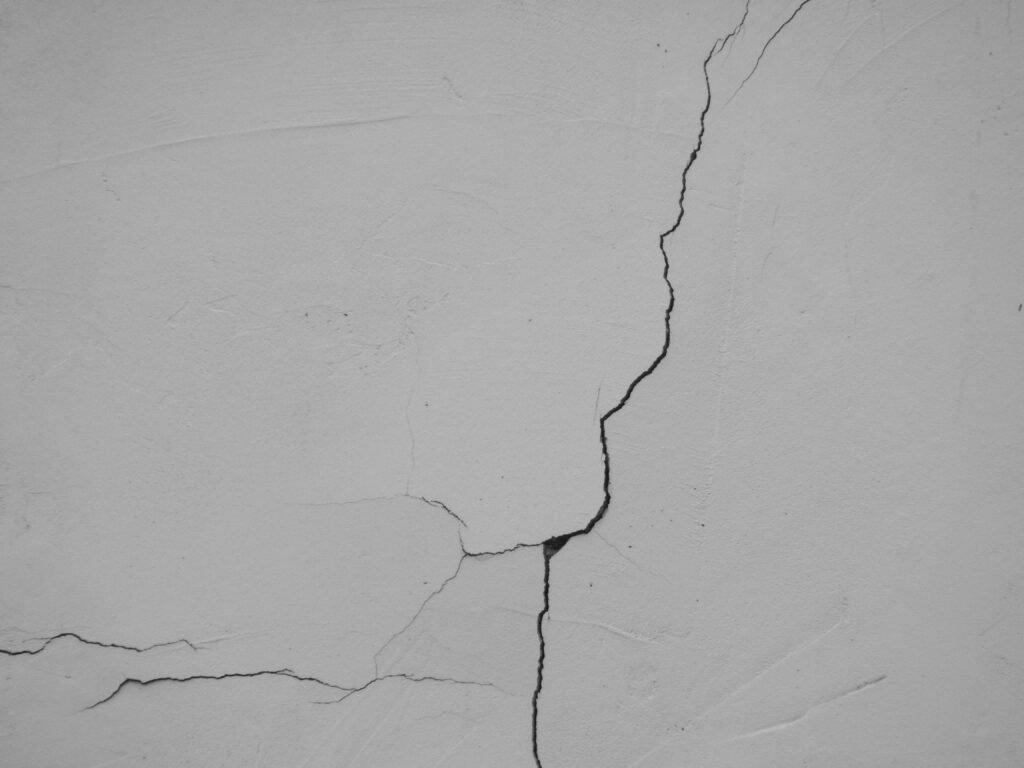
Cracks can occur in drywall, plaster, masonry veneers, slabs, and flatwork. Diagonal cracks near openings, stepped masonry cracks, or separations at corners can be consistent with differential movement, yet thermal cycling, material shrinkage, and framing changes can look similar. Track size, orientation, and location relative to water sources and drainage. If cracks change with wet and dry periods, that pattern may suggest a moisture relationship, but treat it as an indicator to investigate rather than a diagnosis.
Doors, windows, and floors
Doors or windows that bind in a recurring way, gaps that open at trim on one side of a room, or floors that feel uneven may reflect movement. Many such signs can also result from non-foundation causes, including framing moisture changes, fastener slip, or subfloor issues. Focus on consistency of location and timing, and relate observations to rainfall, irrigation shifts, vegetation changes, or known leaks to guide maintenance priorities and help decide when to seek a professional opinion.
Seasonal timing and reversibility
Some expansive-soil sites show seasonal movement that partly reverses as moisture changes. A slab may lift slightly in a wet period and trend back as soils dry. Not all change reverses, and long cycles can produce a net shift over time. Reversibility or its absence is a useful observation rather than a verdict about safety. Significant or worsening movement, sudden changes, or visible displacement merit qualified assessment to separate seasonal cycling from ongoing or structural concerns.
Documenting What You Observe
Clear records connect moisture conditions to observed changes and provide context if a professional evaluation is needed. Documentation reduces guesswork, reveals timing lags between weather and indoor changes, and shows whether adjustments in drainage, irrigation, or landscaping improved or worsened symptoms.
What to record and why timing matters
Log the date, weather, and exact location for each observation. Note the symptom type, such as a diagonal crack at a specific window corner, a door rubbing at the top latch side, or a ponding spot after rain. Take photos with a consistent reference point and scale. Because moisture effects often lag behind weather, align observations with recent storms and irrigation history. Some site changes, such as new plantings or altered watering, may take a season or more to influence soils beneath the footprint.
Mapping moisture sources and drainage paths
Sketch the site showing roof lines, downspouts, drains, paved areas, landscape beds, trees, and low spots. Mark storm flow routes, sprinkler coverage, and known or suspected leaks or utility lines. Update the map as you adjust irrigation, modify grading, change landscaping, or add hardscape. Over time, pairing the map with your notes can reveal which water pathways correlate with recurring symptoms and which changes coincided with improvement or no change. This background is helpful for a geotechnical or structural professional.
When a General Understanding Is Not Enough
General knowledge of soil moisture and foundation movement supports better observation and maintenance, but some conditions exceed homeowner monitoring. Active or worsening movement, visible displacement, major cracks, recurring water intrusion, sudden settlement, or uncertainty around structural elements justify a qualified assessment to identify mechanisms and set priorities.
Signs that call for qualified assessment
Seek professional input if you notice new or worsening cracks that cross structural elements, inward movement at basement or crawlspace walls, floors that suddenly become uneven, doors or windows that rapidly become inoperable, or water intrusion that returns despite basic drainage maintenance. These concerns can reflect structural capacity limits, hidden leaks, or significant soil changes that warrant specialized investigation rather than observation alone.
What a professional evaluation can determine
A qualified evaluation can indicate whether expansive soils are likely, identify how and where moisture is reaching the foundation, and assess whether movement appears seasonal, ongoing, or linked to a specific leak or drainage condition. The review may include site grading and drainage, vegetation influences, weather history, and, when appropriate, testing to confirm soil properties. Professionals can separate contributing factors, prioritize practical steps to moderate moisture extremes, and explain whether observed changes look typical for local conditions or call for further action.
Frequently Asked Questions
Can changes in soil moisture really move a foundation?
Yes, under the right conditions. Clay-rich expansive soils can increase in volume when wetted and shrink when dried. If these changes occur unevenly beneath a structure, they can produce differential movement that appears as cracks, sticking doors or windows, or uneven floors. The extent depends on soil mineralogy, the amount and timing of moisture, foundation type, and the building’s weight and stiffness. Confirmation at a specific home requires qualified assessment because similar symptoms can have different causes.
Does wet soil always mean a foundation will heave?
No. Wet soil does not automatically cause heave. Heave is more closely tied to expansive clays that swell significantly with added water, a sufficient water supply to drive swelling, and structural conditions that allow upward translation of that swelling as movement. Sandy or silty soils often pass water without large volume change. Even in expansive soils, the structure’s load, confinement, and drainage can limit how much movement occurs. Each site’s response reflects its materials and water pathways.
Can dry weather cause foundation movement?
It can, particularly in clay-rich soils. As soils dry, they can shrink and reduce support beneath parts of a foundation. If drying is more intense along one side of a structure because of sun exposure, vegetation water uptake, or drainage changes, differential settlement may occur. That said, not all dry periods lead to visible movement, and some changes may reverse when moisture returns. Persistent or worsening symptoms during dry spells warrant a qualified review.
Can trees affect soil moisture near a foundation?
They can under certain conditions. Trees take up water through roots and can dry soils in their influence zones during growing seasons and prolonged dry weather. This may contribute to uneven moisture distribution in clay-rich soils. However, roots typically deflect around solid, intact barriers and are more likely to follow loose backfill or exploit cracks where moisture and air are available. The net effect depends on species, rooting pattern, soil conditions, irrigation, and distance from the structure rather than a single factor.
Can I diagnose the cause from one crack?
A single crack rarely provides enough information to diagnose cause. Crack size, orientation, location, timing, and change across wet and dry periods all matter. Other observations, such as drainage behavior, irrigation practices, vegetation, and potential leaks, add necessary context. Active movement, sudden changes, or uncertainty near structural elements should be evaluated by a qualified professional who can relate observed symptoms to site-specific conditions and testing if needed.
The Bottom Line
Soil interacts with water in ways that change volume and support capacity. The most consequential issues arise from differential movement, where one portion of the soil beneath a structure wets or dries more than another. Clay-rich expansive soils have the highest potential for shrink-swell behavior, but the site’s mineralogy, soil layering, grading, irrigation, vegetation, surface coverings, and leaks determine how much movement occurs and where it is likely to show. Uniform changes are often tolerated better than uneven ones.
Homeowners can add clarity by observing and documenting patterns through wet and dry periods, mapping routes for water from roof to yard, noting irrigation and vegetation influences, and addressing obvious sources of excess wetting or drying as general maintenance. These steps do not replace professional evaluation. Active movement, visible displacement, major or worsening cracks, recurring water intrusion, sudden settlement, or uncertainty involving structural elements call for a qualified assessment based on the property’s soils and water pathways.
With a practical understanding of how moisture affects soil behavior and steady attention to site conditions, it is possible to limit moisture extremes around a foundation and to recognize when expert help is appropriate. This balanced approach supports better observations, sound maintenance choices, and decisions that respect the geological realities of each site.