Summary
- Foundation repair preserves the structural integrity and long-term value of your home, stopping minor issues before they become major structural failures.
- Winter’s severe freeze-thaw cycles and heavy clay soil create specific challenges that require specialized, engineering-minded solutions.
- Early warning signs like sticking doors, bowing basement walls, and stair-step cracks should prompt an immediate professional inspection.
- Permanent solutions such as helical piers for settling and interior drain tile systems for moisture control provide long-term stability that temporary fixes simply cannot
What Foundation Repair Actually Means
The foundation is the most critical structural component of your home. Foundation repair is the process of diagnosing and correcting issues that compromise this base, so the structure above it remains safe and stable over time. Whether the problem involves a concrete slab, a crawlspace, or a basement, understanding what is causing the damage is the first step toward a permanent fix.
A shifting or cracking foundation does not stay contained. The effects ripple upward through the entire house — doors stick, floors slope, drywall cracks, and gaps open up between walls and trim. Addressing these issues promptly, with an engineering-minded approach, is what separates a lasting repair from a patch job that fails in two years.
What Causes Foundation Damage
Foundation problems rarely develop overnight. Most of the time, they are the result of environmental forces, soil conditions, and water intrusion working together over months or years.
Expansive Clay Soil
Soil across the United States is predominantly clay, and clay is highly expansive. When it absorbs water from heavy rain or snowmelt, it swells and pushes against the foundation walls with significant hydrostatic pressure. During dry periods, the same clay shrinks and pulls away, leaving voids beneath the footing that reduce support. That constant cycle of swelling and shrinking puts the foundation under stress year after year, eventually leading to cracks and settlement.
Freeze-Thaw Cycles
Winters add another layer of stress. Water that penetrates the soil around the foundation freezes and expands, pressing outward against the walls. When that ice melts in spring, it leaves saturated soil and weakened concrete behind. Repeated over many winters, this process turns hairline cracks into serious structural concerns.
Poor Drainage
Water pooling near the base of the house is one of the most common causes of foundation damage. If the yard slopes toward the home, or if gutters and downspouts deposit water too close to the foundation, the soil stays saturated for extended periods. That sustained moisture increases hydrostatic pressure and creates conditions where water can seep through the wall/floor seam or push through porous cinder blocks.
Tree Roots
Large trees planted close to the house draw moisture from the soil, particularly during dry summers. As roots extract water from the ground beneath the footing, the soil shrinks unevenly, causing the foundation to shift or settle in isolated spots. Tree roots are also more likely to contribute to bowing wall issues than to uneven floors.
Warning Signs to Watch For
Catching foundation issues early saves money and prevents more extensive repairs down the road. These are the most common indicators that something is wrong.
Exterior Signs
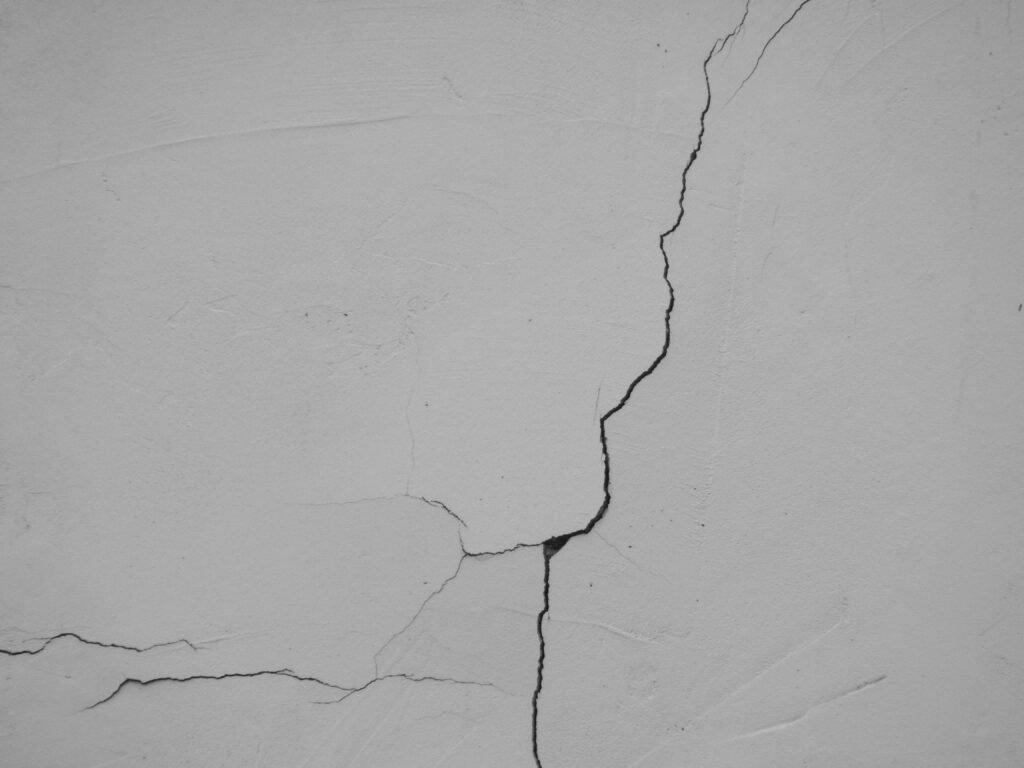
Stair-step cracks in brickwork: Cracks that follow the mortar joints in a stair-step pattern are a reliable sign of foundation settlement. The pattern reflects the way the masonry moves as the footing beneath it shifts.
Gaps around windows and doors: Spaces forming between the exterior siding and a window or door frame suggest the foundation is moving and pulling the structure out of square.
Leaning chimneys: A chimney that tilts away from the house indicates the soil beneath it can no longer provide adequate support.
Horizontal cracks in the foundation wall: These are among the most serious signs. A horizontal crack indicates a shearing wall under extreme pressure from the surrounding soil, and it typically requires steel beams to address.
Interior Signs
Sticking doors and windows: Foundation movement twists the framing of the house, making it difficult to open or close doors and windows properly. This is one of the earliest and most consistent warning signs homeowners notice.
Cracks in drywall: Pay attention to cracks originating from the corners of doorframes or windows, or running along the seams where walls meet the ceiling. These follow the stress lines created by a shifting foundation.
Floors dipping toward the outside: Floors that slope toward the exterior walls, or feel spongy underfoot, usually indicate settlement or deteriorating floor joists below. Uneven floors are generally caused by poor construction, moisture causing settlement or rusting of support posts, deterioration of lumber, or improper supports such as rocks, bricks, or scrap lumber.
Bowing basement walls: An inward curve or bulge in the basement wall is a sign of excessive hydrostatic pressure. The severity of the bow determines which repair method is appropriate.
Moisture and Water Intrusion
Dampness at the wall/floor seam: The joint where the basement wall meets the floor is the primary weak point where water enters. Any consistent dampness in this area warrants a professional inspection.
Musty odors: A persistent damp smell in the basement or crawlspace points to ongoing moisture issues, even when no visible water is present.
Efflorescence: White, chalky residue on basement walls forms when water seeps through the concrete and deposits minerals on the surface. It is a reliable indicator of water movement through the wall.
Repair Solutions That Actually Work
The repair approach starts with finding the root cause. The goal is never to apply a quick fix — it is to provide a permanent solution that holds up over time.
Foundation Settlement Repair
When a foundation sinks or settles unevenly, it needs robust support to stop further movement and, where possible, restore the original elevation.
Helical piers are the preferred solution for settling foundations. These steel piers are screwed deep into the ground until they reach stable, load-bearing soil, transferring the weight of the home away from the unstable surface layer. They provide both stabilization and lift, and can be installed from the exterior or interior, depending on the property’s specific conditions. Most foundation repair companies focuses on helical piers because they provide a reliable, lasting result.
Bowing Wall Stabilization
A bowing wall means the foundation is failing to resist the pressure of the surrounding soil. The right repair depends on how far the wall has moved.
Carbon fiber straps work well for walls that have bowed less than 2 inches. The straps bond directly to the wall surface and prevent further inward movement. It is worth being clear about what they do and do not do: carbon fiber straps stabilize the wall and stop it from moving further, but they do not straighten it and they do not prevent future cracking.
Waler wall braces are the better option when bowing exceeds 2 inches, or when straightening the wall is the goal. Unlike carbon fiber straps, waler braces can actually push the wall back toward its original position over time.
Helical tie-backs offer another path for bowing walls. This system anchors the wall to stable soil outside the foundation, counteracting the inward pressure from the saturated clay.
Basement Waterproofing
Moisture control in the basement starts with managing where water goes, not just trying to keep it out.
Interior drain tile systems are the most effective approach for basements. A trench is cut along the interior perimeter of the basement floor, a perforated pipe is installed, and the system connects to a sump pump. A sump pump is always included with a drain tile installation — it is what actively removes the water from the home. The wall/floor seam is the primary focus, as that joint is where water most commonly enters.
Crack repair for long-term or actively leaking cracks involves installing a PVC patch that redirects water into the drainage system rather than letting it enter the living space. Waterproof coatings applied to interior walls are not recommended, as they trap moisture inside the concrete rather than managing it.
Exterior waterproofing is sometimes the right call, particularly for finished basements where interior work would require significant disruption. The process involves excavating next to the exterior foundation, placing a vapor barrier, a drain tile, and 6A round stone. Each plan of repair may be slightly different, but it will be very similar to this description.
Crawlspace Solutions
Crawlspaces are prone to moisture accumulation, which affects the structural integrity of the floor above over time.
Crawlspace encapsulation involves installing a heavy-duty moisture barrier that seals out outside air and moisture. Beyond moisture control, encapsulation helps eliminate musty smells and supports good indoor air quality throughout the home.
Insulation seals small openings along the sill plate and bond board, preventing exterior air from entering the crawlspace. This keeps temperatures consistent in the space below and prevents cold floors in the living areas above during winter.
The Repair Process, Step by Step
Knowing what to expect makes the process far less stressful. Here is how a typical foundation repair project unfolds with a professional foundation repair contractor.
Step 1 — Free inspection: The process starts with a thorough evaluation of the interior and exterior of the home. The goal is to identify all signs of damage and determine the root cause, not just the most visible symptom.
Step 2 — Customized repair plan: Based on the inspection findings, a tailored repair plan is developed. Pricing is transparent, and the recommended solutions are explained clearly, without pressure.
Step 3 — Preparation: Depending on the repair method, some excavation or interior prep work may be needed to access the foundation footer or install the chosen system.
Step 4 — Installation: Experienced technicians install the appropriate systems, whether helical piers, interior drain tile, carbon fiber straps, or waler braces, following strict engineering standards throughout.
Step 5 — Review: Once the work is complete, the site is cleaned up and the repairs are reviewed with the homeowner, covering what was done and what to expect going forward.
Preventative Maintenance for Long-Term Stability
After a repair, or to protect a foundation that is currently in good shape, a few consistent maintenance habits go a long way.
Gutters and downspouts: Keep gutters clean and make sure downspouts extend at least 5 to 10 feet from the foundation. Water deposited close to the house is one of the most common and preventable causes of foundation damage.
Grading: The soil around the home should slope away from the foundation at roughly 6 inches per 10 feet. Over time, soil settles and this grade can reverse — check it periodically and regrade as needed.
Landscaping: Large trees and shrubs planted close to the house draw moisture from the soil near the footing. Keep them at a safe distance, and monitor any existing mature trees that may already be affecting soil conditions.
Plumbing leaks: A hidden leak beneath the foundation can erode the supporting soil without any visible surface signs. If a leak is suspected, have a licensed plumber address it immediately. Foundation contractors do not handle plumbing repairs.
Foundation Repair FAQs
Does homeowner’s insurance cover foundation repair?
You may be covered by your homeowner’s insurance if the foundation damage is the direct result of a sudden, covered peril, such as a plumbing leak or a specific natural disaster. Damage caused by normal settlement, expansive soil, or long-term wear and tear is typically not covered. Always check with your insurance provider to understand your specific policy before assuming coverage applies.
Are uneven floors always a sign of foundation failure?
Not necessarily. Uneven floors are usually caused by improper support below the floor, requiring support posts, beams, or floor joist repair. The causes range from poor original construction and moisture-related settlement to rusting support posts, deteriorated lumber, or improper supports like rocks or bricks. While uneven floors always need attention, they do not automatically mean the main foundation walls are failing.
Will carbon fiber straps straighten my bowing wall?
No. Carbon fiber straps provide stabilization and prevent further inward movement, but they do not straighten walls and they do not guarantee the prevention of future cracking. If the wall has bowed more than 2 inches, or if straightening is the goal, waler wall braces or steel beams are the more appropriate option.
Why is water coming through the middle of my basement floor?
Water seeping up through the floor is typically caused by hydrostatic pressure. When the soil beneath the foundation becomes saturated, the pressure pushes upward and finds its way through hairline cracks or porous areas in the concrete slab. An interior drain tile system connected to a sump pump is the most effective way to manage this issue on an ongoing basis.
What is the difference between interior and exterior waterproofing?
Interior waterproofing manages water that has already entered the foundation by collecting it and directing it to a sump pump. It is generally less expensive and less disruptive to landscaping. Exterior waterproofing addresses the problem from outside the foundation wall, which is often the better choice for finished basements where interior access is limited. Each plan of repair may be slightly different, but the exterior process typically involves excavating next to the foundation, placing a vapor barrier, a drain tile, and 6A round stone.
How do I know if my foundation problem is serious enough to call a professional?
Any horizontal crack in a basement wall, a wall that is visibly bowing inward, floors that slope toward the exterior walls, or multiple sticking doors and windows appearing at the same time are all signs that a professional inspection is warranted. A free inspection costs nothing and provides a clear picture of what is happening and what, if anything, needs to be done.