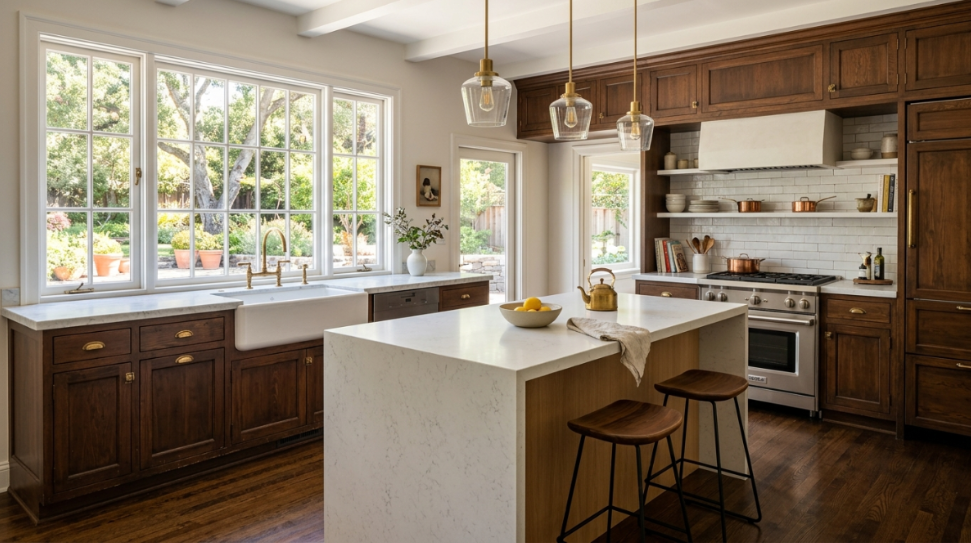
Older kitchens often have something that new kitchens cannot easily copy. They may have warm wood cabinets, detailed trim, classic tile, or a layout that reflects the history of the home. The good news is that homeowners do not have to remove these features to enjoy a more useful space.
The best approach is to keep the details that give the kitchen its charm while updating the parts that affect daily use. Thoughtful Kitchen remodeling in Palo Alto can improve storage, lighting, appliances, and work areas without making an older kitchen feel new in the wrong way. The goal is to blend modern comfort with the home’s original style.
Smart Ways to Modernize an Older Kitchen While Preserving Its Character
1. Start by Identifying the Kitchen’s Character
Before making changes, look closely at what makes the kitchen special. It could be original cabinets, wood flooring, old-style hardware, built-in shelves, arched openings, or handmade tile.
These details can guide the rest of the project and help homeowners avoid removing features that add value and charm. Make a short list of the elements worth keeping. Then look at the parts that cause daily problems, such as poor storage, weak lighting, limited counter space, or old appliances.
This creates a clear plan. Instead of changing everything, homeowners can focus their budget on updates that improve comfort while keeping the kitchen’s original feel.
2. Improve the Layout Without Changing Everything
A kitchen does not always need a major layout change to work better. Small adjustments can make cooking, cleaning, and storage much easier.
For example, adding a pull-out cabinet, moving a small appliance area, or improving the space between the sink and cooking area can make daily tasks smoother. Homeowners should first study how they move through the kitchen.
If the main work areas already have a good flow, keeping them in place can save money and protect the room’s character. A designer can also find ways to add useful storage without removing walls or changing the kitchen’s basic shape.
3. Refresh Cabinets Instead of Replacing Them
Older cabinets can often be one of the strongest character features in a kitchen. If the doors are still in good shape, replacing them may not be necessary. Cleaning, sanding, repainting, or refinishing the cabinets can give them a fresh look while keeping their original design.
New cabinet hardware can also create a noticeable change. Simple knobs and handles in a style that matches the home’s age can make older cabinets feel updated without looking out of place.
If more storage is needed, homeowners can add new cabinets that match the existing ones in color, wood type, or finish.
4. Mix Modern Appliances With Classic Details
Modern appliances can make an older kitchen much easier to use. Energy-efficient refrigerators, quiet dishwashers, induction cooktops, and modern ovens can provide better performance without forcing the whole room into a new style.
The key is choosing appliances that fit the scale and look of the kitchen. Stainless steel may work well in some homes, while panel-ready appliances can blend into traditional cabinets.
Smaller appliances can also help preserve counter space. The goal is not to hide every modern feature, but to make sure new equipment feels like part of the overall room instead of taking over its design.
5. Update Lighting for a Brighter Work Area
Good lighting can change an older kitchen without changing its character. Many older kitchens have one central light, which can leave counters and cooking areas too dark. Adding task lighting under cabinets can make food preparation safer and easier.
Pendant lights or simple ceiling fixtures can provide more style while adding useful light. Warm bulbs often work well with wood cabinets and traditional finishes because they create a comfortable feel.
Homeowners can also add dimmers to control the mood at different times of day. These changes are usually less disruptive than structural work but can have a strong effect on how the kitchen feels.
6. Choose Materials That Match the Home
New materials should work with the home’s existing style. A modern surface can still look natural in an older kitchen when its color, texture, and shape are chosen carefully.
For example, simple stone counters may pair well with older wood cabinets, while handmade-looking tile can support a classic design.
Avoid using too many different finishes in one room. A kitchen with several bold materials can quickly lose its original charm. Instead, choose a small group of materials that work together.
Keeping a connection between the counter, backsplash, cabinets, flooring, and hardware can make newer additions feel like they belong.
7. Keep Original Features Where Possible
Some older kitchen features are worth keeping even if they are not perfect. Original woodwork, exposed beams, vintage windows, old doors, and built-in storage can give the room a strong sense of place.
Removing these features can make a kitchen look cleaner but less personal. When an original feature has minor wear, repair may be a better choice than replacement. A skilled contractor can often restore wood, repair trim, or refresh older surfaces.
Keeping these details also helps maintain a visual link between the kitchen and the rest of the house. Modern updates then become part of the home’s story rather than a complete break from it.
8. Add Storage Without Making the Kitchen Feel Crowded
Older kitchens often have less storage than modern households need. However, adding too many large cabinets can make the room feel heavy. The better solution is to use the available space more efficiently.
Consider options such as:
- Pull-out shelves inside deep cabinets
- Tall storage for baking items and small appliances
- Drawer organizers for utensils
- Corner storage systems
- Open shelves in small sections
- Built-in areas for coffee makers or other appliances
These changes can increase useful storage without making the kitchen look crowded. Even small improvements can reduce clutter and keep counters clear.
9. Use Hardware to Connect Old and New
Hardware is a small detail, but it can help bring an updated kitchen together. New handles, knobs, faucets, and hinges can be selected to match the age and style of the home. Brass, bronze, nickel, and other finishes can create different looks, so homeowners should consider the existing lighting, cabinet color, and other metal details.
Using one main metal finish can create a more organized appearance. However, a small mix of finishes can also work when used with care. The important point is to avoid choosing hardware only because it is trendy. A timeless design is more likely to work with the character of an older Palo Alto home.
10. Bring in Modern Comfort With Small Upgrades
Not every improvement needs construction. Simple changes can make an older kitchen more comfortable while keeping its traditional appearance. A modern faucet with a pull-down sprayer can make washing dishes easier.
Soft-close hinges can reduce noise. New drawer slides can make old cabinets easier to use. Other useful upgrades include better ventilation, outlets in practical locations, and smart controls for lights.
These features can stay mostly hidden while improving everyday use. This approach is especially useful for homeowners who like their kitchen’s current appearance but want it to meet the needs of a modern household.
11. Protect the Home’s Original Style During the Remodel
A successful kitchen update should consider the whole house, not just the kitchen. Colors, flooring, trim, doors, and cabinet styles should connect with nearby rooms.
A kitchen that looks completely different from the rest of the home may feel disconnected, even when the work is high quality. Homeowners should take photos of nearby spaces before choosing finishes. This makes it easier to select materials that fit the home’s wider design.
It can also help contractors understand which features should remain untouched. Preserving these links is one of the simplest ways to make a modern kitchen feel natural inside an older property.
12. Plan the Budget Around What Matters Most
A clear budget helps homeowners decide where modern upgrades will have the most value. Structural changes, new cabinets, plumbing work, electrical updates, and premium materials can quickly increase project costs.
Keeping useful cabinets and existing layouts can reduce some of these expenses. Start with the problems that affect daily life. If storage is the biggest issue, focus on cabinets and organization. If the kitchen is dark, improve lighting first.
If appliances are outdated, replace them while keeping the surrounding design simple. This approach allows homeowners to spend money on practical improvements instead of changes that only make the room look different.
13. Work With the Existing Home Instead of Against It
Older homes often have design details that are difficult to reproduce today. Their proportions, materials, and craftsmanship can give a kitchen a warm and personal feel. Modernizing the space should respect these qualities instead of covering them with the latest trends.
Homeowners can create a balanced result by combining updated appliances, better storage, improved lighting, and durable surfaces with original cabinets, trim, flooring, or other details. The result does not need to look perfectly new. It should feel comfortable, useful, and connected to the home.
Conclusion
Modernizing an older kitchen does not mean removing everything that makes it special. By keeping original features, improving storage, updating lighting, choosing modern appliances carefully, and matching new materials to the home’s style, homeowners can create a kitchen that feels both useful and authentic.
Thoughtful kitchen remodeling can bring modern comfort while protecting the character that makes an older Palo Alto home unique.
If you are ready to update your kitchen design while keeping its original charm, The Kitchen & Bath Company of Palo Alto can help you plan and complete a design that fits your home, lifestyle, and needs.