The Quick Rundown
- A small bedroom that feels cramped is almost always a storage problem, not a size problem.
- The edit comes first. Buying containers before you know what you own is the single most common mistake.
- Vertical space is the most underused resource in a small bedroom. Walls, door backs, and ceiling-height shelving are all fair game.
- Under-bed storage can effectively double your available storage without adding a single piece of furniture.
- A storage bed is the highest-impact single purchase you can make in a small bedroom.
- The nightstand is an extension of your closet, not a dumping ground. Use it accordingly.
- Bedroom clutter has a measurable effect on sleep quality. Aesthetics are secondary to sleep science.
- Labeling is what separates a system that lasts from one that collapses within a month.
The Real Problem With Small Bedrooms
Most people assume a small bedroom is a square footage problem. It usually isn’t.
The actual problem is that small bedrooms accumulate items without a designated place for each of them. Clothes end up on chairs. Books stack on the floor. Shoes scatter near the door. The room doesn’t feel small because it is small. It feels small because every surface is doing double duty as storage.
“Bedroom storage isn’t just about hiding clutter,” says Barbora Samieian, cofounder and CEO of furniture retailer Sundays. “It’s about creating a sense of calm. A well-organized space directly impacts how restful the room feels.”
That connection between clutter and rest is backed by research. Sleep expert Carl Walsh, owner of Bed Guru, puts it plainly: “A messy and cluttered bedroom will affect how fast you fall asleep and the quality of your sleep.” Dr. Chelsie Rohrscheib, head sleep expert and neuroscientist at Wesper, explains the mechanism: “The brain is a pattern recognition machine and makes strong associations between your environment and your behavior. When your bedroom is calm, comfortable, and quiet, your brain will associate your bedroom with relaxation, making it much easier to relax and fall asleep.” When the room is cluttered, the brain reads it as a workspace or a stress zone, and sleep suffers accordingly.
So small bedroom organization ideas are not a decorating project. They are a sleep quality project.
Start With the Edit
Before you buy a single bin, basket, or shelf, you need to know what you actually own.
Pull everything out of your bedroom. Every drawer, every shelf, every pile on the floor. Lay it out where you can see it. The goal is to get an honest picture of what you’re working with before deciding how to store it.
Ashley Murphy, cofounder and CEO of the NEAT Method and author of The NEAT Method Organizing Recipe Book, recommends paying particular attention to seasonal items. “Remove the excess, then adopt the ‘one in, one out’ rule to keep your system in check,” she says. Summer totes crowding your closet in winter, a box fan taking up floor space in January, a pile of winter coats in July: these all belong somewhere else, not in a small bedroom.
Once you’ve edited down to what genuinely belongs in the room, you can start thinking about storage. Buying containers first and editing second is how people end up with bins full of items they don’t need, organized neatly on shelves they can’t afford to lose.
Use Every Inch of Vertical Space
The floor plan of a small bedroom is fixed. The vertical space is not.
Most small bedrooms have 8 to 10 feet of ceiling height, and most people use maybe 4 feet of it. That gap between the top of the wardrobe and the ceiling, the empty wall above the door, the bare space above the bed headboard: all of it is usable storage.
Murphy is direct on this point: “When storage space is at a minimum, take a minute to look up and determine whether there is vertical space you aren’t taking advantage of. That may mean mounting hooks on an empty wall, stacking lidded bins on a top shelf, or placing shoe shelves on your closet floor.”
Floating shelves are the most flexible way to claim vertical space. A row of shelves running from waist height to ceiling height on a single wall can hold books, folded items in baskets, and decorative objects without consuming any floor space at all. The key is to treat the top shelves as seasonal or rarely accessed storage and keep the lower shelves for daily-use items.
Leah Alexander, principal designer of Beauty Is Abundant in Atlanta, makes a specific point about lighting: “Wall sconces are fantastic savers of nightstand surface area. Plug-in sconces are a great way to remain flexible with wall lighting without an electrician.” Moving a lamp off the nightstand and onto the wall frees up the entire nightstand surface for other uses, or removes the need for a nightstand with a large footprint altogether.
Small Bedroom Organization Ideas by Storage Zone
Under the Bed
Under-bed storage is the most reliable win in a small bedroom. A standard bed frame sits 7 to 13 inches off the ground, and that space is almost always wasted.
Murphy recommends using “shallow lidded bins to tuck less often used items, like out-of-season clothing or spare bed linens, under the bed and out of sight.” The key word is lidded. Open bins under the bed collect dust and make the room feel messier, not cleaner. Clear lidded bins let you see what’s inside without opening them.
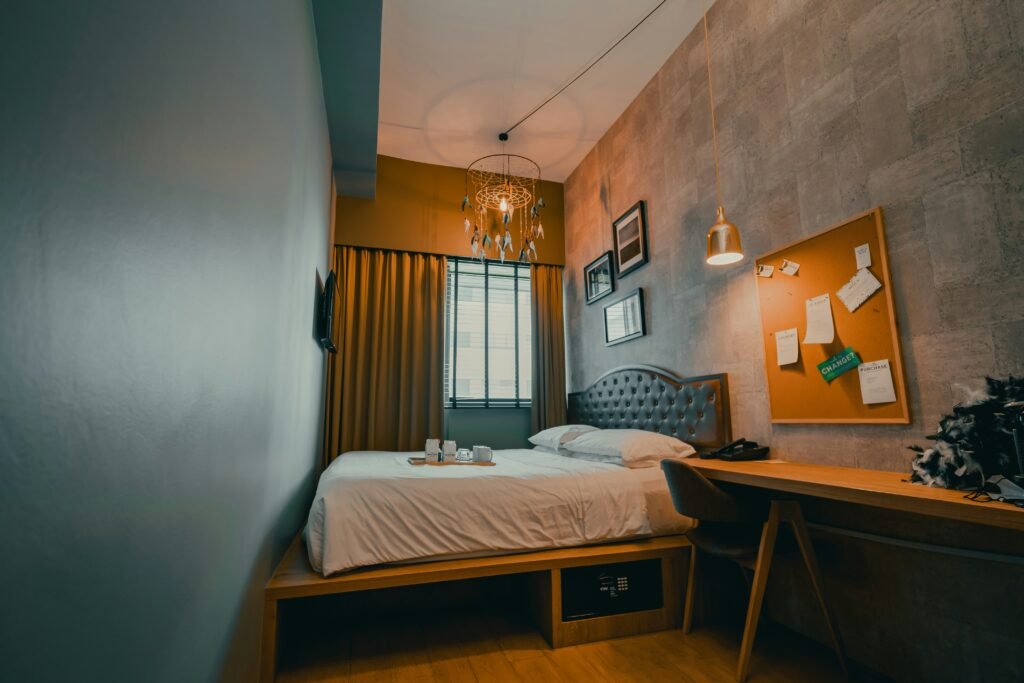
If your current bed frame sits too low for bins, bed risers can lift it 3 to 6 inches at minimal cost. If you’re buying a new bed, a storage bed with built-in drawers or a hydraulic lift platform is worth the investment. Samieian describes the hydraulic lift mechanism as a “hidden second closet under the slats.” The Sundays Cloud bed, for example, uses this system so you’re not wrestling with the mattress to access what’s stored underneath.
For items you access regularly, under-bed drawers built into the bed frame are more practical than bins you have to pull out and slide back. For seasonal items, bins work well because you’re only accessing them twice a year.
The Nightstand
The nightstand is one of the most misused pieces of furniture in a small bedroom.
Murphy’s observation is worth quoting in full: “The nightstand is often overlooked as valuable storage space and instead tends to be a collection zone for whatever books and ChapStick land there. Consider using it as an extension of your closet or dresser by dedicating lower drawers (or a bin on a shelf) to socks or pajamas.”
That reframe changes how you shop for nightstands. A nightstand with two drawers and a lower shelf is more useful than a decorative table with no storage. A nightstand with a pull-out tray or charging station built in can eliminate the need for a separate charging cable pile on the surface.
If your nightstand surface is perpetually cluttered, a trinket tray or small catchall dish is an easy fix. It corrals the items that land there (phone, glasses, earbuds, lip balm) into one contained spot rather than spreading across the whole surface.
The Closet
A small bedroom closet that isn’t organized properly will overflow into the room. The closet and the bedroom are one system.
The first move in any small bedroom closet is removing the door. This sounds counterintuitive, but a closet door in a small room eats floor space every time it swings open. Without the door, you can push the closet organization all the way to the floor and ceiling, and the visual openness makes the room feel larger.
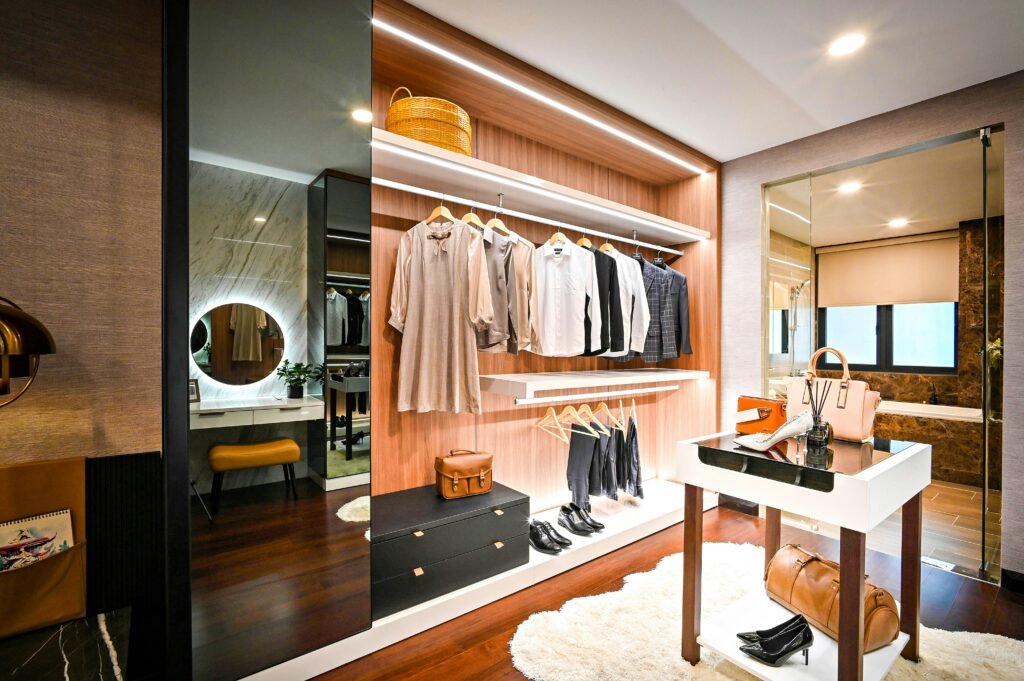
Floor-to-ceiling organization inside the closet means adding a second hanging rod below the first for shorter items (jackets, folded pants, shirts), adding shelf risers to double the number of shelves, and using the floor for shoe racks or drawer units. The back of the closet door, if you keep it, can hold an over-door organizer for shoes, accessories, or small folded items.
For closets without enough hanging space, a wardrobe is a practical addition. IKEA’s Rakkestad wardrobe starts at around $200 and can be placed against any wall to create a dedicated clothing zone without a renovation.
Walls and Doors
Every wall and door in a small bedroom is a potential storage surface.
Hook racks are the most obvious option, but the design matters. A row of plain hooks looks like a locker room. Architectural Digest’s Yelena Moroz Alpert recommends looking for “artsy hook racks” that function as sculptural pieces. Ferm Living’s Unda Hook set ($69) and the Sin For-Everything Rack ($190) are two examples of hooks that look intentional rather than utilitarian.
The back of the bedroom door is often completely unused. An over-door organizer with clear pockets can hold shoes, accessories, or folded items. A single hook on the back of the door handles the “not quite dirty, not quite clean” clothes that otherwise end up on a chair.
A wall panel or pegboard near the closet can hold an entire outfit’s worth of accessories: bags, belts, scarves, and jewelry. This keeps frequently worn items visible and accessible without taking up drawer space.
Furniture That Works Twice as Hard
In a small bedroom, every piece of furniture should justify its floor footprint by doing more than one job.
Storage benches at the foot of the bed hold extra linens, seasonal items, or off-season clothing while also providing a seat for putting on shoes. The GreenRow Lexington Floral Storage Bench ($3,199) and the Mabeo Studio Lesire Storage Bench ($3,995) are high-end options, but functional storage benches start well under $200 at most furniture retailers.
Storage beds are the highest-impact single purchase in a small bedroom. The Sundays Cloud Bed with Storage ($2,590) and the Castlery Dalton Storage Bed ($1,699) both use under-mattress storage to create what is effectively a second closet. For a bedroom without a dedicated linen closet, this is where extra sheets, duvet inserts, and seasonal blankets live.
Tall dressers over wide dressers. A dresser with a small footprint and six drawers stacked vertically uses less floor space than a wide dresser with four drawers. The vertical surface on top can hold a mirror, a tray, and a plant without feeling cluttered.
Rolling carts are underrated in bedrooms. A slim rolling cart can serve as a mobile nightstand, a book storage unit, or a bedside charging station. The Yamazaki Tower Slim Rolling Bathroom Cabinet ($165) is designed for bathrooms but works equally well beside a bed.
Daybeds are worth considering if the bedroom doubles as an office or guest room. A daybed with hidden storage shelves (like the Brigette Romanek x Crate & Barrel Sunset Daybed at $1,899) functions as a sofa, a bed, and a storage unit simultaneously.
Small Bedroom Organization Ideas for Specific Situations
Shared Bedrooms
Two people sharing a small bedroom means two wardrobes, two sets of preferences, and twice the potential for clutter.
The most effective approach is to divide the room into clear zones. Each person gets a dedicated side of the closet, a dedicated drawer section, and a dedicated nightstand. Shared items (extra linens, seasonal storage) go in a neutral zone, typically under the bed or in a storage bench.
Labeling matters more in shared spaces. Murphy is a strong advocate: “Labels make it really clear what is stored where for a system that can be easily maintained long-term.” When both people know where each item goes, the system sustains itself.
Renters
Renters can’t install built-in shelving or remove closet doors without landlord approval, but most small bedroom organization ideas work without any permanent changes.
Freestanding wardrobes, rolling carts, over-door organizers, and bed risers all require zero drilling. Tension rods inside closets can create a second hanging rail. Command hooks on walls hold hook racks and small shelves without leaving permanent marks.
The one investment worth making even as a renter is a storage bed. You’re taking the bed with you when you move, and the storage it provides is significant enough to justify the cost.
Kids’ Small Bedrooms
Children’s small bedrooms have a specific challenge: the storage needs change as the child grows, and the volume of toys, books, and clothes is disproportionate to the room size.
Low, accessible storage is the priority. Open bins at floor level let young children put items away independently. A low bookshelf doubles as a display for toys and books. Under-bed storage works well for seasonal clothing and outgrown items waiting to be donated.
As children get older, vertical storage becomes more viable. A loft bed with a desk or storage underneath is one of the most space-efficient configurations possible in a small bedroom. It effectively stacks the sleeping area on top of a functional workspace, freeing the entire floor for other uses.
The Labeling Rule
A storage system without labels is a system that will fail within a few weeks.
Labels are not about aesthetics. They are about reducing the cognitive load of maintaining the system. When every bin, basket, and drawer is labeled, putting items away becomes automatic. Without labels, every item requires a decision: “Where does this go?” That friction is what causes items to pile up on surfaces rather than returning to their designated spot.
Murphy’s labeling recommendation applies to every storage container in the room: bins, baskets, drawers, and shelves. The format doesn’t matter much. A label maker produces clean results, but handwritten labels on card stock work just as well. NEAT Method Label Holder Sets ($36) and NEAT Method Closet & Mudroom Label Sets ($24) are purpose-built options, but a roll of washi tape and a marker achieves the same outcome.
Common Mistakes in Small Bedroom Organization
Buying storage before editing. Containers bought before the edit end up holding items you don’t need, organized neatly in space you can’t afford to waste.
Ignoring vertical space. Most small bedrooms have 4 to 6 feet of unused wall space above the highest shelf. Floating shelves, stacked bins, and ceiling-height wardrobes all reclaim that space.
Using open storage for everything. Open shelves and bins look clean when the room is organized and chaotic when it isn’t. Closed storage (drawers, lidded bins, cabinets with doors) is more forgiving and keeps the room looking tidy even when it isn’t perfectly organized.
Choosing wide furniture over tall furniture. A wide, low dresser uses more floor space than a tall, narrow dresser with the same storage capacity. In a small bedroom, footprint matters more than height.
Treating the nightstand as a catch-all. The nightstand is storage. Use it for items that belong in a bedroom (pajamas, socks, a book, a phone charger) and nothing else.
Skipping labels. A system without labels requires active memory to maintain. Labels make the system self-sustaining.
Organizing without a maintenance plan. Even the best small bedroom organization system needs a weekly reset. Five minutes at the end of each week to return items to their designated spots is enough to keep the system functional long-term.
Maintaining the System
The edit and the setup are one-time events. Maintenance is ongoing.
A daily habit of returning items to their designated spots takes less than two minutes and prevents the slow accumulation that turns an organized room back into a cluttered one. The one-in-one-out rule Murphy recommends is the other half of maintenance: every new item that enters the room displaces an existing one.
A deeper audit every six months (ideally at the seasonal change) catches the items that have crept in without a designated home. Seasonal clothing gets rotated in and out of under-bed storage. Items that no longer belong in the room get donated or relocated.
Dr. Chelsie Rohrscheib recommends a deep clean at least once a week, which includes washing bedsheets and removing dust and irritants. A clean room and an organized room are related but different goals. Both contribute to sleep quality.
Frequently Asked Questions
What is the best storage solution for a very small bedroom with no closet?
A freestanding wardrobe is the most practical replacement for a built-in closet. Pair it with under-bed storage for folded items and a wall-mounted hook rack for frequently worn pieces. IKEA’s Rakkestad wardrobe ($200) is a reliable starting point.
How do I organize a small bedroom on a tight budget?
The highest-impact low-cost changes are bed risers ($15-$30) to create under-bed storage, over-door organizers ($20-$40) for shoes and accessories, shelf risers inside the closet ($15-$25) to double shelf capacity, and a label maker or washi tape to make the system stick. None of these require drilling or permanent changes.
Does the color of a small bedroom affect how organized it feels?
Light, neutral wall colors make a small bedroom feel larger and calmer, which reinforces the psychological effect of an organized space. Dark colors can work in small bedrooms but require careful lighting to avoid making the room feel smaller. The organization itself matters more than the color, but the two work together.
How often should I reorganize a small bedroom?
A full reorganization once or twice a year is enough if you maintain the system with a weekly reset. The seasonal change is a natural trigger: rotate seasonal clothing, audit what’s accumulated, and donate anything that no longer belongs.
What should I do with items that don’t have a home in a small bedroom?
If an item doesn’t have a designated spot in the room, it either belongs somewhere else in the home or it belongs in a donation bag. The “no designated home” rule is the clearest signal that the edit wasn’t thorough enough.
Is it worth investing in a storage bed for a small bedroom?
For most people with a small bedroom, yes. A storage bed replaces the need for a separate linen closet or a large dresser by providing significant hidden storage under the mattress. The cost is higher upfront, but the floor space and closet space it frees up makes the investment worthwhile.