
The Quick Rundown
- Empty the entire drawer onto a counter before making any decisions about what to keep.
- Clean the empty drawer thoroughly and consider adding a decorative liner to protect the base.
- Group items into distinct categories like office supplies, small tools, and electronics.
- Measure the drawer’s width, depth, and height before purchasing any storage bins or dividers.
- Use clear, modular bins or adjustable bamboo dividers to create customized compartments.
- Secure organizers in place using museum gel or non-slip mats to prevent shifting.
- Perform a five-minute maintenance check every month to remove broken items and stray receipts.
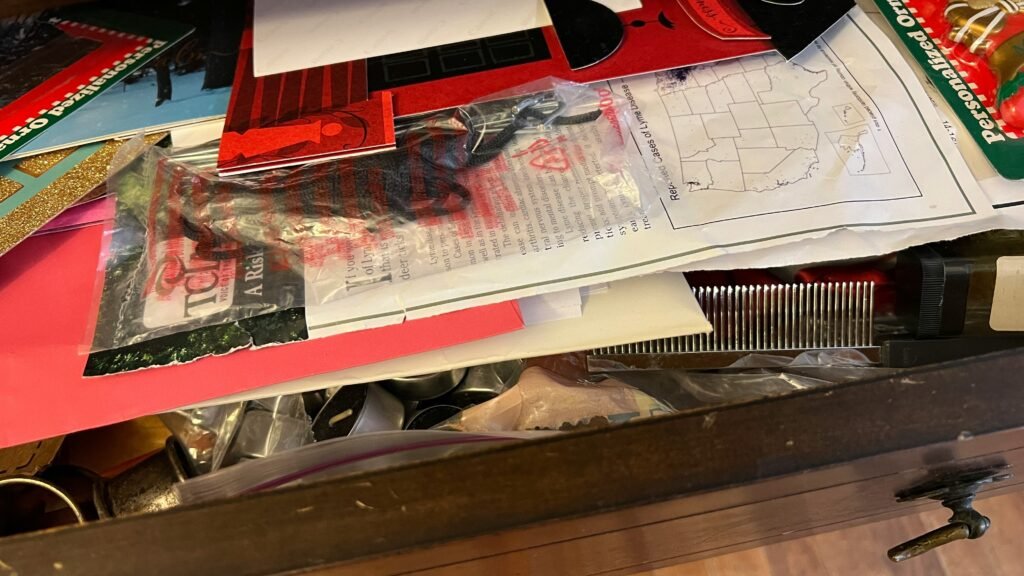
Every home seems to have that one drawer. It is the place where loose batteries, spare keys, rubber bands, and mysterious charging cables go to hide. When you need a piece of tape or a pair of scissors, you know exactly where to look, but finding the item often involves digging through a tangled mess. This catch-all space is a universal phenomenon, and it rarely stays tidy for long.
According to a 2024 survey, 95% of Americans admit to having at least one junk drawer in their home. Half of the population maintains just a single drawer of randomness, while a dedicated 16% have taken it to the next level with over three junk drawers. Nationally, the average junk drawer holds 53 items, with tape, pens, batteries, and scissors being the most common. Transforming this chaotic space into an efficient utility drawer is entirely possible with the right junk drawer organization ideas.
The Psychology of the Catch-All Space
Junk drawers emerge organically as a practical solution to managing items that do not immediately fit into structured storage systems. They represent a compromise between complete organization and functional chaos. Rather than discarding potentially useful items or spending excessive time categorizing every small object, individuals create these flexible storage zones that balance convenience with minimal effort.
Consumer psychologists view these drawers as complex microcosms of personal organization. The contents often reveal much about a household’s lifestyle, priorities, and problem-solving approach. What might appear as clutter to an outsider often represents a personalized system of temporary storage. When the drawer becomes so full that it barely opens, the convenience factor disappears. This is why three out of four people have organized a junk drawer only to realize that all they did was move the mess around, rather than fixing the underlying problem.
Start with a Blank Slate
The biggest mistake people make when organizing a junk drawer is trying to sort it while the items are still inside. The catch-all mentality conditions us to toss items we do not know what to do with into one space and deal with them later. To break this cycle, you must remove everything.
Pull every single item out of the drawer and spread it across a counter or table. This forces you to confront exactly how much you have accumulated. Once the drawer is completely empty, wipe it down to remove dust, crumbs, and graphite smudges. If you want to elevate the space, apply a decorative contact paper or drawer liner. A fresh pattern can make the drawer look intentional and encourage you to keep it tidy.
Sort, Purge, and Categorize
With your items spread out, begin sorting them into three distinct piles for keeping, donating, and tossing. Be merciless during this phase. Throw away dried-out pens, dead batteries, expired coupons, and duplicate takeout menus. If you find a random key and have no idea what it unlocks, it is time to let it go.
Once you have purged the actual junk, categorize the remaining items. Grouping similar items together is the foundation of any good organization system. The table below outlines the most practical categories and the items that belong in each one.
| Category | Typical Items to Keep |
| Office Supplies | Pens, pencils, markers, paper clips, post-it notes |
| Adhesives & Fasteners | Scotch tape, packing tape, rubber bands, push pins |
| Small Tools | Scissors, screwdrivers, small measuring tape |
| Electronics | Charging cables, rechargeable batteries, flash drives |
| Utility | Flashlight, matches, lighters, super glue |
If you find items that belong in a different room, such as a rogue tube of lip balm or a stray sock, relocate them immediately. A junk drawer should only contain small, frequently used household items that do not have another obvious home.
Measure Before You Buy
The secret to a perfectly organized drawer is using the right containers. Before you purchase any bins or dividers, measure the width, depth, and height of the drawer. Because junk drawers often contain multiple categories, organizers prevent everything from sliding together into one big pile.
When shopping for organizers, look for modular systems that allow you to customize the layout. Think of it like playing a game of Tetris until everything fits perfectly. If you have a deep drawer, consider two-tier organizers that slide or stack, giving you easy access to items on both levels while maximizing the available space.
Select the Right Organizers
The market is flooded with drawer organization products, but a few specific types work best for taming a chaotic catch-all space.
- Clear modular bins: These make the drawer look larger and allow you to see the contents easily. You can buy them in multipacks with various sizes to accommodate both long scissors and tiny paper clips.
- Adjustable bamboo dividers: These provide a more integrated look. They clip directly into the drawer and create distinct boundaries between categories. Because bamboo is heavy, these dividers are less likely to shift when the drawer opens and closes.
- Interlocking drawer dividers: These lock together, allowing you to create custom arrangements that fit your specific needs.
- Museum gel: If your bins tend to slide around when you open the drawer, use a tiny amount of this removable adhesive underneath each container. It secures the bins in place without damaging the drawer bottom.
Prep Items for Immediate Use
Now comes the satisfying part of putting everything back. Place each category into its designated organizer or section. Before you close the drawer, take it one step further by prepping the items for use.
Sharpen all the pencils so they are ready when you need to jot down a quick note. Fold the end of the tape over slightly so it is easy to grab the next time you need a piece. Pair loose batteries together by size, and secure charging cables with small velcro ties to prevent them from tangling. These small finishing touches make a significant difference in how the drawer functions on a daily basis.
Maintain the System
You can spend hours organizing your junk drawer, but without maintenance, it will eventually revert to its natural state of chaos. The key to long-term success is a simple monthly reset.
Spend five minutes once a month reviewing the contents of the drawer. Toss any broken items, test the pens, and remove anything that found its way into the drawer without a real purpose. Try to return items to their designated sections immediately after using them so the categories stay intact. If you find that a particular category is constantly overflowing, it might be time to find a new, dedicated home for those items elsewhere in the house.