The Quick Rundown
- Set the Foundation: Decide exactly what you’ll do in the room. Build a budget and a mood board before you buy a single thing.
- Use the 60-30-10 Rule: Keep your colors balanced. Dedicate 60% of the space to a main color, 30% to a secondary one, and 10% to an accent.
- Layer Your Lighting: A single overhead light kills the mood. Mix ambient, task, and accent lighting to make the room feel warm.
- Find a Focal Point: Pick one star player for the room. A fireplace, a big window, or a massive piece of art works perfectly.
- Watch Your Scale: Make sure your furniture actually fits the room. Always buy the largest rug you can comfortably fit.
- Mix Up Textures: Combine wood, metal, and soft fabrics. Throw in some plants to bring the room to life.
Figuring out where to start with your home can feel paralyzing. Maybe you just bought your first place and the empty rooms are staring back at you. Or maybe you’ve been living with the same tired sofa for a decade and just need a change. You start looking for decorator advice online, and suddenly you’re drowning in conflicting opinions. Should you paint everything white? Is wallpaper back?
It gets overwhelming fast.
We dug through the noise to find the actual, time-tested advice that working interior designers use every day. We’re talking about the real foundational stuff: color theory, furniture placement, and how to hang art without making your living room look like a dorm. If you follow these core strategies, you can build a space that looks incredible and actually works for how you live.
Foundational Decorator Advice: Where to Begin
The biggest mistake people make is buying things without a plan. You see a cool chair on sale, you buy it, and then you have no idea what to do with it. Professional designers don’t work like that. They follow a strict process to make sure the final result actually makes sense.
1. Define the Function and Feeling
Before you even look at a catalog, figure out what the room is for. A living room meant for formal cocktail parties needs a completely different setup than a family room built for sprawling out and watching movies.
Think about these questions:
- What exactly will happen in this room?
- Who is going to spend the most time here?
- How do you want to feel when you walk in?
Function has to come first. A gorgeous room that you can’t actually relax in is just a museum exhibit.
2. Create a Comprehensive Mood Board
You need to see your ideas in one place. Building a mood board helps you spot the common threads in what you actually like. Start pulling images from Pinterest, Instagram, or design blogs.
After you have a few dozen pictures, take a step back. You might notice a pattern. Maybe you thought you loved bright, crazy colors, but every room you saved is actually full of soft, neutral tones. This helps you figure out what you genuinely want to live with.
3. Establish a Realistic Budget
Nobody likes talking about money, but you need a budget to keep the project from spiraling. Split your list into things you absolutely need and things that would just be nice to have.
Designers usually suggest spending your big money on foundational pieces. A great sofa or solid flooring will last for years and dictate the whole vibe of the room. You can save cash on the smaller stuff like throw pillows or side tables. Always keep a 10% to 20% buffer in your budget for the inevitable surprises.
Mastering Color Theory: The 60-30-10 Rule
Color changes everything. It sets the mood and can even make a room feel bigger or smaller. But picking colors that actually look good together is where most people get stuck.
To get that balanced, professional look, designers use the 60-30-10 Rule. It’s a simple formula that keeps your colors from fighting each other.
| Percentage | Role in the Room | Typical Applications |
| 60% | The Dominant Color | Walls, large area rugs, primary furniture pieces. This color anchors the space and sets the overall tone. |
| 30% | The Secondary Color | Curtains, accent chairs, painted furniture, or an accent wall. This color supports the dominant hue while adding depth and interest. |
| 10% | The Accent Color | Throw pillows, artwork, lamps, and small decorative accessories. This is where you introduce a pop of vibrant color or a bold metallic finish. |
Picture a calm living room. You might have 60% soft white on the walls and the main sofa. Then you use 30% navy blue for the rug and a couple of chairs. Finally, you drop in 10% blush pink with some pillows and a vase. It keeps the room from looking like a chaotic mess.
The Art of Furniture Arrangement
Where you put your furniture matters just as much as what you buy. You can have the nicest couch in the world, but if it’s shoved into a weird corner, the whole room feels off.
1. Establish a Clear Focal Point
Every room needs a center of attention. When you walk in, your eye should naturally go to one specific thing. It could be a big architectural feature like a fireplace, or something you add, like a massive painting.
Find that focal point, then arrange your main seating around it. It instantly gives the room a sense of purpose.
2. Float Your Furniture
Amateur decorators almost always push every piece of furniture flat against the walls. They think it makes the room look bigger. Most of the time, it just makes the space feel like a waiting room.
Try pulling your furniture away from the walls. Even moving the sofa a few inches toward the center creates a cozier setup for talking and makes it easier to walk around. In a big room, floating your furniture is the only way to carve out specific zones.
3. Nail the Scale and Proportion
Scale is how big something is compared to the room. Proportion is how big things are compared to each other. Getting this right is what makes a room look professionally designed.
A massive sectional in a tiny room makes the space feel claustrophobic. A tiny loveseat in a huge room just looks sad. Before you buy anything big, map out the dimensions on your floor with painter’s tape. It’s the easiest way to see if a piece will actually fit without blocking your walkways.
The Secrets to Perfect Lighting
People treat lighting like an afterthought. They shouldn’t. A single, bright overhead light can make a beautifully designed room feel like a cafeteria.
Professional decorators use a layered lighting approach. They mix three different types of light:
- Ambient Lighting: This is your base layer. It’s usually ceiling fixtures, recessed lights, or just the natural light coming through the windows.
- Task Lighting: This is exactly what it sounds like. It’s light for doing specific things. Think desk lamps, under-cabinet lights in the kitchen, or a reading lamp next to a chair.
- Accent Lighting: This is the fun stuff. You use it to highlight art, cool architectural details, or plants. Picture lights and wall sconces fit here.
When you mix all three, the room feels dynamic. Also, put your main lights on dimmer switches. Being able to drop the brightness at night changes the whole feel of the house.
Elevating the Details: Rugs, Art, and Accessories
The little things are what give a room its personality. But there are still a few guidelines you need to follow so your accessories don’t ruin the design.
1. The Rules of Rug Sizing
Buying a rug that’s too small is probably the most common decorating mistake out there. It makes the room look cheap and chopped up.
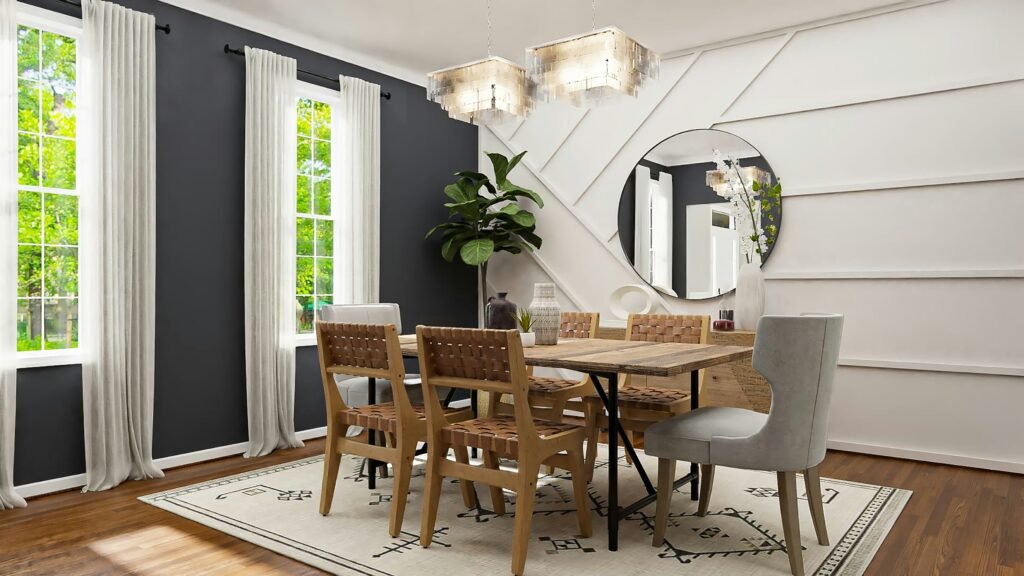
Your rug needs to be big enough to anchor your furniture. In a living room, the front legs of your sofa and chairs should sit on the rug. If you can afford a rug big enough to hold all the furniture legs, even better. In a dining room, the rug needs to stick out at least 24 inches past the table so the chairs stay on it when you pull them out.
2. How to Hang Art Like a Professional
Hanging art too high is another classic mistake. Galleries hang art so the center of the piece is at eye level. That usually means the center should be about 57 to 60 inches off the floor.
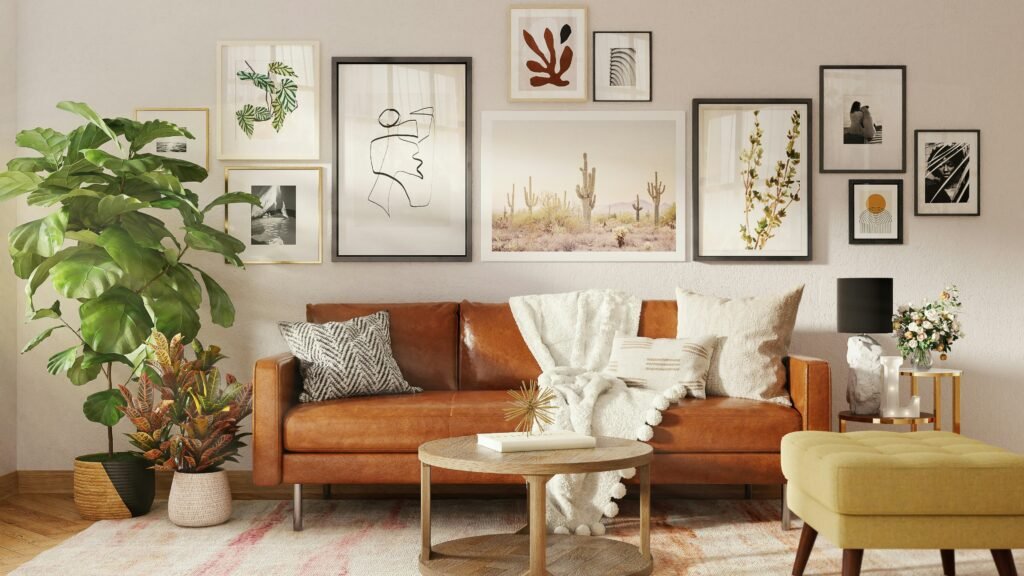
If you’re hanging something over a sofa or a console table, the art should be about two-thirds as wide as the furniture below it. Leave a gap of 4 to 8 inches between the furniture and the bottom of the frame so they look connected.
3. Curating Accessories with the Rule of Three
When decorators style a coffee table or a bookshelf, they use the “Rule of Three.” Things grouped in odd numbers just look better to us.
To make a surface look interesting, group three things with different heights and textures. Put a tall vase next to a stack of books and a small, round bowl. It keeps the eye moving and stops the setup from looking stiff.
Small Space Styling Secrets
Decorating a tiny apartment is tough, but a few tricks can make a small room feel totally functional and stylish.
- Hang Curtains High and Wide: Mount your curtain rods close to the ceiling, not right on the window frame. Let them extend past the sides of the window. It tricks your brain into thinking the windows are bigger and the ceilings are taller.
- Utilize Mirrors Strategically: Mirrors bounce light around and reflect views. Hang a big one across from a window to double your natural light.
- Choose Furniture with Legs: Furniture that sits up on legs feels lighter than pieces that sit flat on the floor. Seeing the floor underneath makes the room feel more open.
- Opt for Multi-Functional Pieces: In a small space, your furniture needs to work hard. Buy an ottoman that opens for storage, or a coffee table that lifts up into a desk.
Final Thoughts: Trust Your Instincts
The rules about scale and color are great, but the most important piece of advice is simple: your home should reflect you.
Don’t get so obsessed with making a room look perfect that you strip all the personality out of it. If you love a weird vintage lamp or a crazy paint color, use it. Trends fade. A house full of things you actually like will always feel right.
Take your time. Get rid of the stuff you don’t love, and let the space come together naturally. If you mix these professional strategies with your own taste, you’ll end up with a home you never want to leave.