From warehouses and logistics parks to factories and office campuses, lighting plays a major role in daily operations. It affects safety, productivity, how a property is perceived after dark, and more, so more commercial property owners are rethinking how their outdoor spaces are powered and illuminated.
Solar street lighting offers a smart alternative. It combines energy independence with modern technology. Over time, it also aligns with sustainability goals that many businesses are now expected to meet. Instead of being a future concept, solar lighting is already proving its value in real-world commercial and industrial settings. It’s a practical solution for businesses looking for reliable lighting without higher energy costs.
What Is Solar Street Lighting?
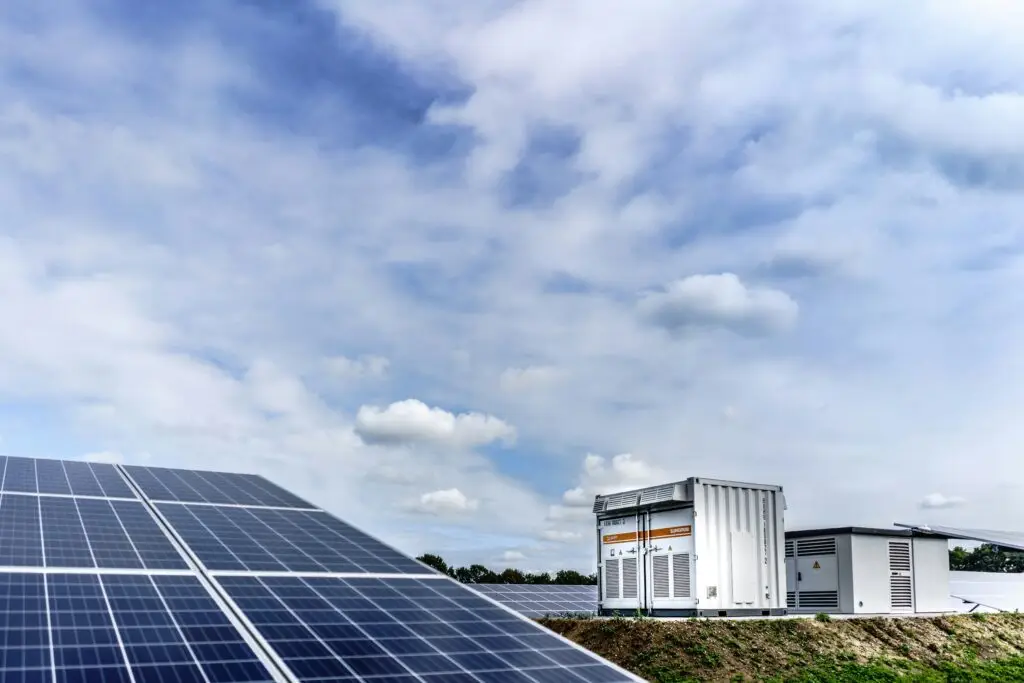
Solar street lighting is an outdoor lighting system that runs on energy collected from sunlight. Each unit usually includes a solar panel, a battery, an LED fixture, and a controller. During the day, the panel captures solar energy and stores it in the battery, and at night, the stored energy powers the light automatically. This process requires no connection to the main power grid.
For commercial and industrial zones, this independence is important. Facilities often cover large areas, and maintaining the needed infrastructure can be expensive and disruptive. With smart features now available for solar street lighting, including timers, motion sensors, and remote monitoring, businesses can manage lighting more efficiently while keeping operations smooth.
Economic Benefits
One of the strongest reasons businesses invest in solar street lighting is cost control. Over time, the financial benefits become hard to ignore.
Lower Energy Costs
A major expense for large commercial properties is electricity bills. Traditional lighting systems draw power every night from the grid, and as energy prices rise, these costs increase. Solar lighting changes that equation; it relies on sunlight, meaning that your operating costs drop significantly.
Once installed, the system produces its own energy. This helps stabilize long-term budgets. For industrial zones, consistency is key, and these savings add up over the years.
Reduced Operational Expenses
Traditional lighting systems come with many expenses, including trenching, wiring, electrical upgrades, complex installation processes, and more, but solar lighting systems avoid these issues by operating independently. They also have fewer components that introduce lower points of failure.
However, they also let site managers detect potential operational issues early, which reduces downtime and emergency repairs. Rather than dealing with costly maintenance, your operations continue running seamlessly.
Long Lifespan and Reduced Maintenance
Solar street lights are designed for durability. LED fixtures last longer than traditional bulbs. The batteries and panels are also built to withstand outdoor conditions. There are lower maintenance needs or replacement requirements.
This is especially helpful in large industrial zones where maintenance access can be challenging. Lower maintenance means lower labor costs and fewer disruptions to daily operations.
Environmental Benefits
Sustainability is no longer optional for many businesses. Environmental responsibility now plays a role in branding, compliance, and long-term planning.
Reduced Carbon Footprint
Solar lighting is a form of clean and renewable energy. It produces no emissions during operation. When commercial and industrial zones switch to solar, they reduce their carbon footprint and support their in-house environmental goals. For any businesses with sustainability standards, this shift is a measurable difference.
Less Light Pollution
Another benefit of solar lights is that it decreases light pollution. Light pollution causes sleep cycle disruption and disturbs wildlife, too. Modern solar lights are directed where needed and do not scatter light into the sky, reducing light pollution around industrial and commercial areas. The community and surrounding environment benefit from darker night skies.
Energy Conservation
Solar lighting promotes cleaner and smarter energy use, as many solar systems adjust brightness based on activity levels. When areas are inactive, lights can dim automatically; when movement is detected, brightness increases. This approach conserves energy and maintains visibility, creating a win-win for environmental, sustainability, and operational goals.
Operational Benefits
Solar street lighting systems don’t just offer benefits in terms of cost and sustainability. They improve daily operations in commercial and industrial areas.
Improved Reliability
Grid-dependent lighting systems fail during outages, which can disrupt operations and compromise safety. Solar street lights continue to operate because they rely on stored energy. Consistent lighting supports security teams, delivery schedules, and employees’ safety, even during unexpected disruptions, which is critical in industrial zones that operate around the clock.
Smart Controls and Automation
Solar lighting systems offer automation, with capabilities that can be programmed to follow schedules, respond to real-time conditions, track facility performance, monitor power usage, and meet your real-world needs. They also often have remote controling systems that require no on-site maintenance teams. This level of control improves efficiency and reduces manual oversight.
Growth
Commercial and industrial zones often expand over time, so their lighting systems must adapt to growth. Solar street lighting systems are highly scalable, and new units can be added without major infrastructure changes. This makes future expansion simpler and more cost-effective.
Challenges and Considerations
While solar street lighting offers many advantages, planning is essential. Proper panel placement is essential, as sunlight availability varies by location. You also must consider battery quality. A professional solar lighting installation company ensures the system is designed to meet your exact needs.
Though solar lighting installation can sometimes be more expensive than traditional systems, the long-term savings offset this initial investment. Proper installation helps you avoid performance problems and rising maintenance costs later on, and it extends the system’s lifespan to keep your area illuminated for years.
Conclusion
Solar street lighting offers clear benefits for commercial and industrial zones. It reduces energy costs, lowers maintenance needs, and supports reliable operations. At the same time, it helps businesses meet environmental goals and improve sustainability efforts. With smart controls and scalable design, these systems adapt to changing needs.
As commercial and industrial spaces continue to grow, solar lighting provides a practical and forward-looking solution. It delivers performance, efficiency, and long-term value, all while supporting a more sustainable future.